James Bond is unusually difficult to see with fresh eyes. Say Blofeld and a bald man with a white cat appears; say Scaramanga and Christopher Lee raises his golden pistol. These are powerful pieces of cinema. They are also only particular interpretations of characters whose literary appearances can be strikingly different.
Ian Fleming often supplied more awkward, distinctive faces than popular memory allows. His villains can be physically extravagant, his allies unexpectedly lean, his heroines more sharply individual than the phrase “Bond girl” suggests. Yet returning to the novels does not mean declaring the films mistaken. A performance can preserve a character’s danger, intelligence or emotional purpose while changing almost everything about the face.
The eighteen entries below distinguish explicit description from interpretation. Book dates are publication dates, not automatic dates for the action. Measurements are approximate where Fleming’s narrator is estimating. Comparisons concern the characters as presented on screen; judgements about an actor’s resemblance are critical assessments, not measurements. Major plot developments are discussed.
There is another reason to read carefully. Fleming frequently uses bodies to suggest morality, and some of his descriptions depend on racial, sexual and national stereotypes. Those are features of the writing to examine, not truths to reproduce uncritically. A convincing portrait should recover an individual, rather than simply amplify the narrator’s prejudices.
01 James Bond
On the page: Casino Royale (1953) and From Russia with Love (1957).
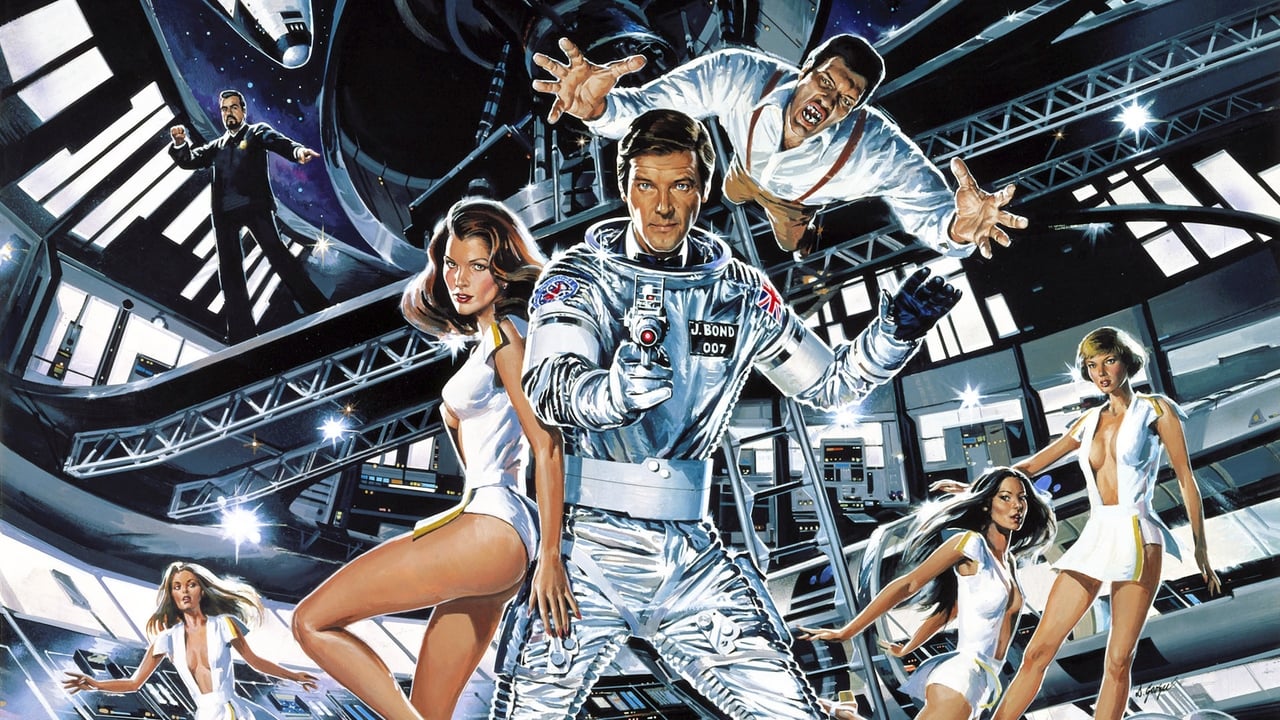
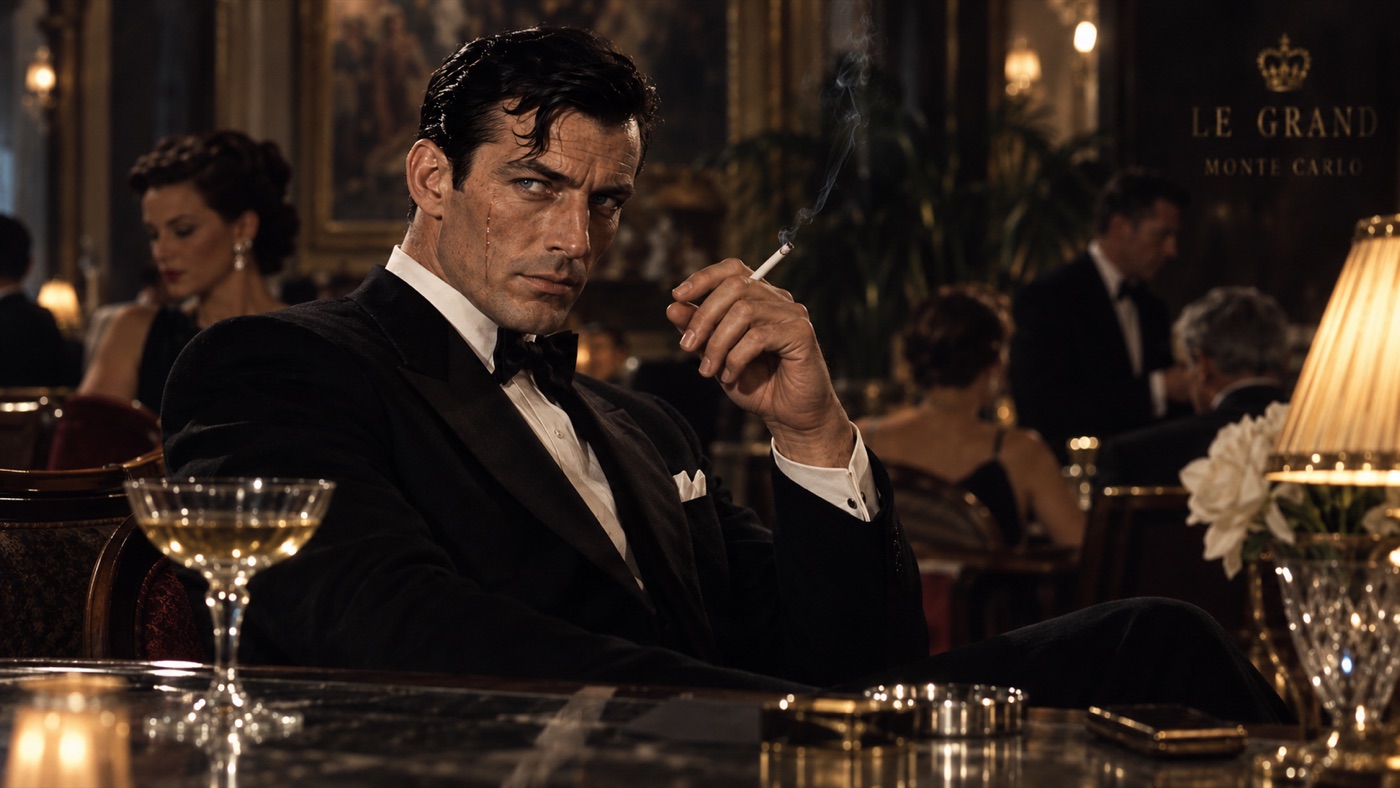
The essential outline is a lean, dark-haired man with a persistent comma of hair over his right eyebrow, blue or blue-grey eyes and a vertical scar on his right cheek. The SMERSH dossier gives his height as 183 centimetres and weight as 76 kilograms. This is an athletic physique without the bulk of a modern action-film body. [1, 2]
On screen: Sean Connery, George Lazenby, Roger Moore, Timothy Dalton, Pierce Brosnan and Daniel Craig in the EON series. Barry Nelson’s television Bond and David Niven’s comic interpretation belong to separate adaptations. [3, 30]
Connery gives the character physical assurance; Dalton makes his severity especially visible; Brosnan brings a polished silhouette; Craig turns bodily strain and injury into a major part of the performance. Those are different emphases, not a reliable league table of fidelity. Craig’s light hair is an obvious departure, but hair colour alone says little about how persuasively he conveys danger.
The most suggestive literary comparison is with musician Hoagy Carmichael. Vesper makes it, and Bond subsequently considers it in the mirror. It offers a clue to facial character, not instructions to reproduce Carmichael’s face. [1]
For a literary portrait, the scar and unruly lock matter because they disturb the immaculate surface. Bond should look capable of wearing evening dress without looking as if evening dress is his entire occupation. Restoring those small irregularities is more revealing than assembling the most conventionally handsome features of six actors.
02 Felix Leiter
On the page: Introduced in Casino Royale (1953).
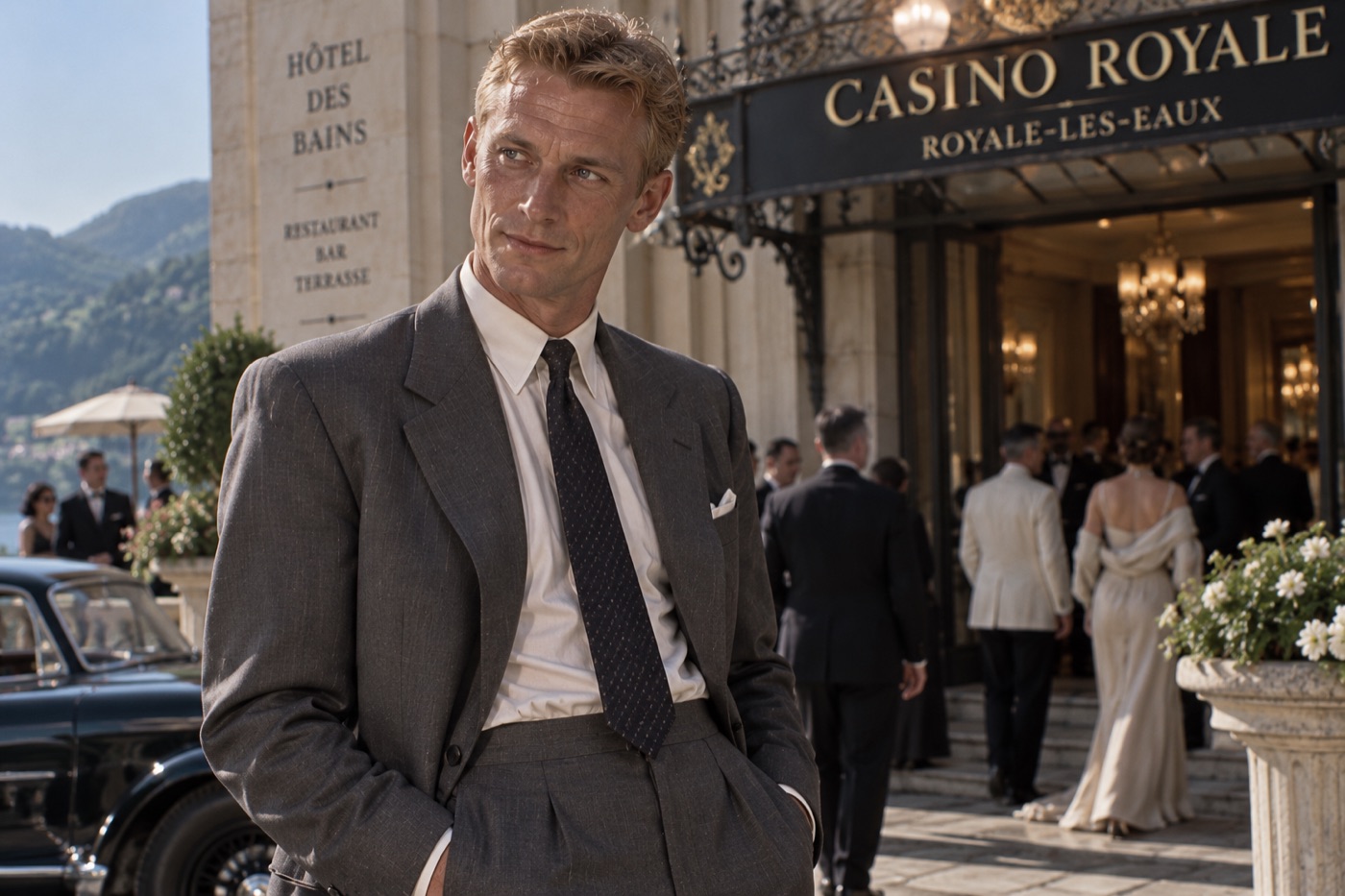
Fleming’s Leiter is about thirty-five, tall and thin, with a bony frame, straw-coloured hair and grey eyes. His loose-hanging suit prompts a comparison with Frank Sinatra; the impression of a falcon suggests speed beneath his unhurried manner. [1]
On screen: Jack Lord, Cec Linder, Rik Van Nutter, Norman Burton, David Hedison, John Terry and Jeffrey Wright in the EON films. [4]
The changing casting makes Felix an unusually useful test of what “the same character” means. His appearance varies considerably, while his place beside Bond remains recognisable. Wright’s understated authority is particularly far from a literal recreation of the blond literary figure, yet the friendship needs no explanatory machinery to work.
A Casino Royale portrait belongs to Leiter’s earlier, uninjured life. Later literary Leiter has a hook in place of his right hand; Thunderball states the side explicitly. The shark attack originates in Live and Let Die, but the films use the episode in Licence to Kill, with Hedison’s Leiter. [5, 6, 4]
That migration is a fine example of adaptation across titles: a recognisable Fleming incident can appear decades later under a different name. A portrait caption should specify which stage of Leiter’s life it represents. Otherwise an accurate early portrait can be mistaken for an incomplete later one.
03 Ernst Stavro Blofeld
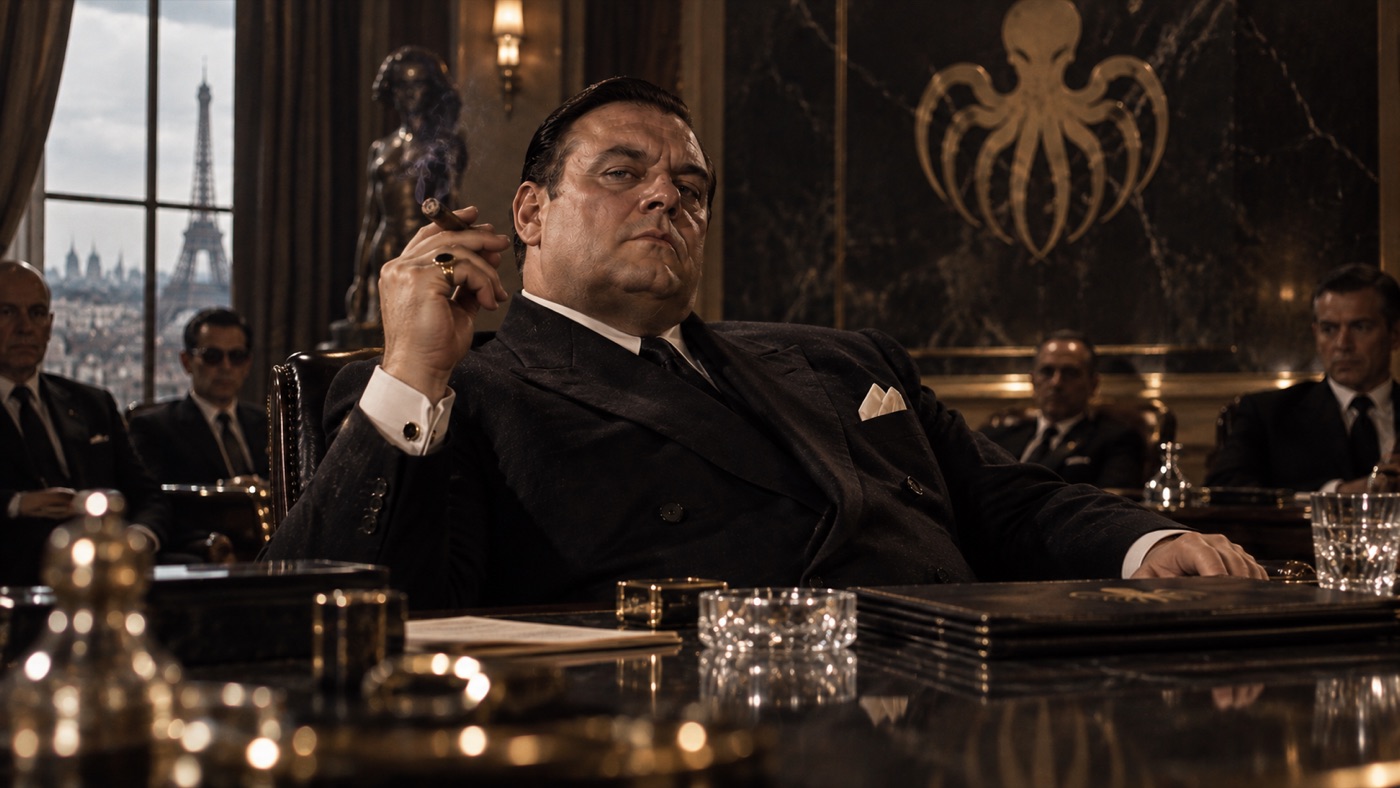
On the page: Thunderball (1961), with substantially altered appearances in the next two SPECTRE novels.
The Thunderball incarnation is enormous: roughly 6 ft 3 in and twenty stone, with black hair, a massive head and a body whose former strength has softened. His hands and feet are long and pointed. This is a specific version of Blofeld, not a permanent model for every appearance. [6, 7]
On screen: Anthony Dawson, voiced by Eric Pohlmann, establishes the concealed figure; Donald Pleasence, Telly Savalas, Charles Gray and Christoph Waltz provide the principal revealed EON incarnations. [8]
Pleasence’s bald, scarred image became so influential that it can seem older than the novel. It is not the Thunderball description. Nor does the white cat belong to that literary portrait. Cinema introduces the animal while keeping Blofeld’s face hidden, creating a recognisable image out of partial visibility. [8]
The Paris SPECTRE meeting offers a telling literary setting: danger expressed through respectable rooms and administrative order. The contrast with a spectacular film hideout is about the manner in which power presents itself, as much as about hair or girth. [6]
One unusually precise anecdote survives any change of face: Fleming gave Blofeld his own birthday, 28 May 1908. [7] The author’s personal detail sits inside a character who repeatedly reconstructs his identity. For this portrait, however, the label must remain Thunderball Blofeld, rather than an imaginary composite of all three novels.
04 Sir Hugo Drax
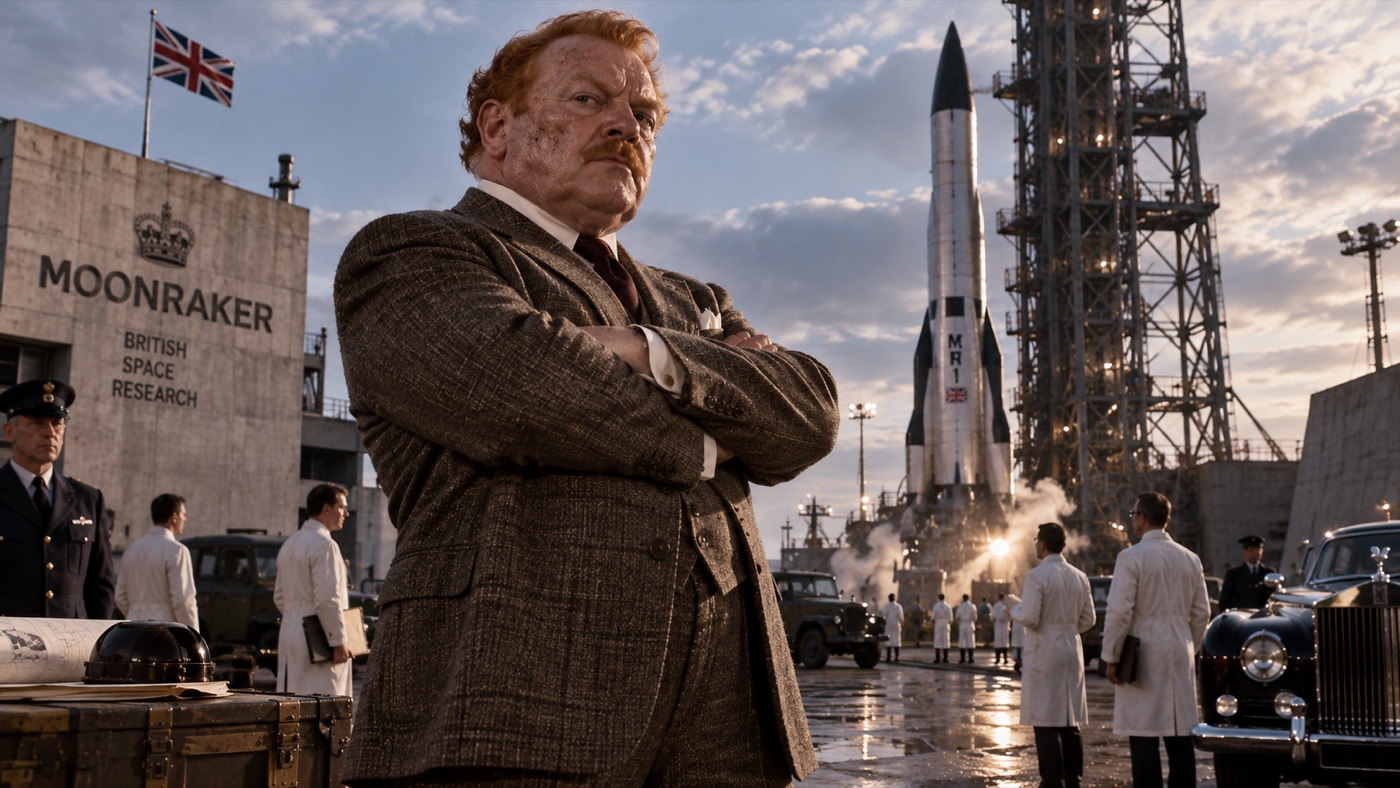
On the page: Moonraker (1955).
Drax is broad-shouldered and physically imposing, with reddish hair, a bushy reddish moustache and conspicuous facial damage. Fleming describes reconstructive surgery on the right side of his face and an enlarged, bloodshot right eye. Hair partly conceals the damage. His noisy, bullying presence is almost the opposite of immaculate restraint. [9]
On screen: Michael Lonsdale in Moonraker (1979). [10]
Lonsdale’s Drax is memorable for stillness, dry delivery and cultivated superiority. The literary figure’s bluster becomes something closer to aristocratic boredom. This is one of the clearest cases in which casting and performance jointly remake a character: the difference would remain even if both men wore the same suit.
The stories are equally far apart. Fleming’s supposed British benefactor is a concealed Nazi preparing a rocket attack on London; the film places its industrialist within a space-age extermination scheme. [11, 10] A rocket behind the portrait is consequently appropriate only if it belongs to the British missile project, not to the film’s shuttle fleet.
The name itself has an unexpectedly naval connection. Ian Fleming Publications identifies Admiral Sir Reginald Aylmer Ranfurly Plunkett-Ernle-Erle-Drax as its source. [11] That extravagant real name suits a fictional identity built to command unquestioning respect. The portrait’s challenge is to show the public benefactor and the aggressive man behind him occupying the same face.
05 Francisco Scaramanga

On the page: The Man with the Golden Gun (1965).
Scaramanga’s file describes a man of about thirty-five, 6 ft 3 in tall and slim, with reddish crew-cut hair, light-brown eyes, long sideburns and a thin pencil moustache. The third nipple is literary, not a novelty invented for Christopher Lee. So is the golden weapon, although Fleming specifies a gold-plated Colt .45 single-action revolver rather than the film’s assembled pistol. [12, 13]
On screen: Christopher Lee in The Man with the Golden Gun (1974). [14]
Lee’s height and composure preserve something essential about the threat, but his dark-haired elegance gives it a different finish. His Scaramanga looks like a man who might discuss murder over a particularly civilised lunch. The book’s criminal milieu is rougher and more commercially grubby.
The setting is decisive. The novel’s Jamaican hotel venture belongs to a world of gangsters, speculative development and violence. The film supplies an island retreat, a theatrical shooting arena and an energy-related scheme. [12, 14] Giving the literary portrait the film’s scenery would change its meaning even if the face and revolver were correct.
Fleming also gives Scaramanga a circus past. As a teenage trick shot, he kills a policeman after the death of a beloved performing elephant. [13] It is a peculiar origin for a professional assassin, connecting showmanship and lethal precision. In an effective portrait, the weapon should seem familiar in his hand rather than displayed as an expensive souvenir.
06 Mr Big
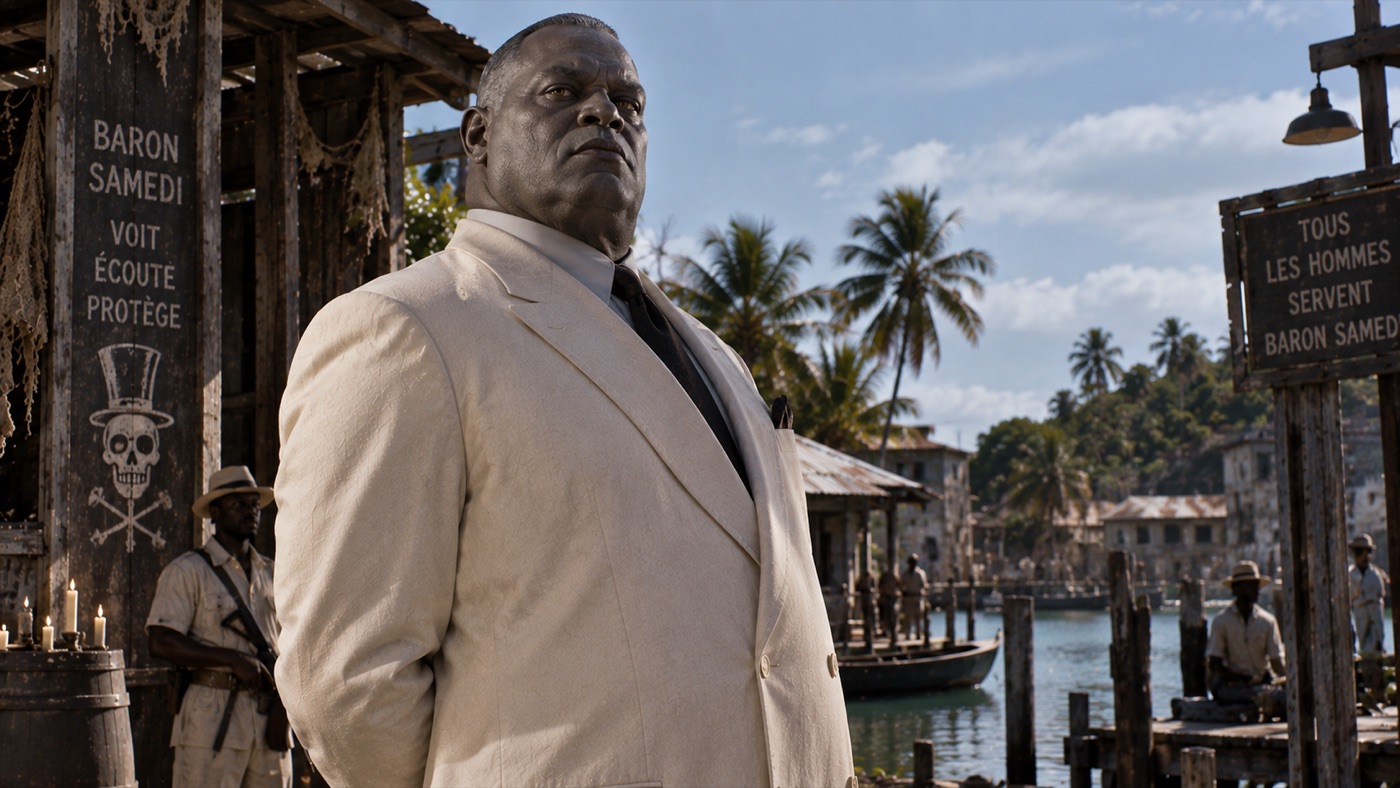
On the page: Live and Let Die (1954).
Buonaparte Ignace Gallia is a French-Haitian criminal and SMERSH operative. His scale is fundamental: 6 ft 5 in and approximately twenty stone. Fleming gives him a huge head and a disturbing greyish complexion; his physical presence is meant to dominate the encounter. [5, 15]
On screen: Yaphet Kotto as Mr Big and Dr Kananga in Live and Let Die (1973). [16]
The film makes Mr Big a disguised identity of Kananga. That revelation is not the explanation of the novel’s man. Kotto’s performance consequently operates on two levels: the deliberately altered gangster face and the poised ruler beneath it. Comparing the literary portrait only with unmasked Kananga misses half the screen conception.
The criminal enterprise changes too. Fleming’s operation uses historical gold coins and Soviet connections; the film revolves around heroin. The Baron Samedi association is also redistributed: literary Big cultivates the belief that he possesses supernatural authority, while the film supplies a separate, theatrically embodied Baron Samedi. [15, 16]
His name contains a small joke: the initials Buonaparte Ignace Gallia spell B.I.G. [15] Yet the portrait should not reduce him to a joke about size. What distinguishes him is the combination of huge physical presence and organised, calculating power. An upright, largely motionless composition can express that more effectively than another cigar, glass and crowded desk.
07 Miss Moneypenny
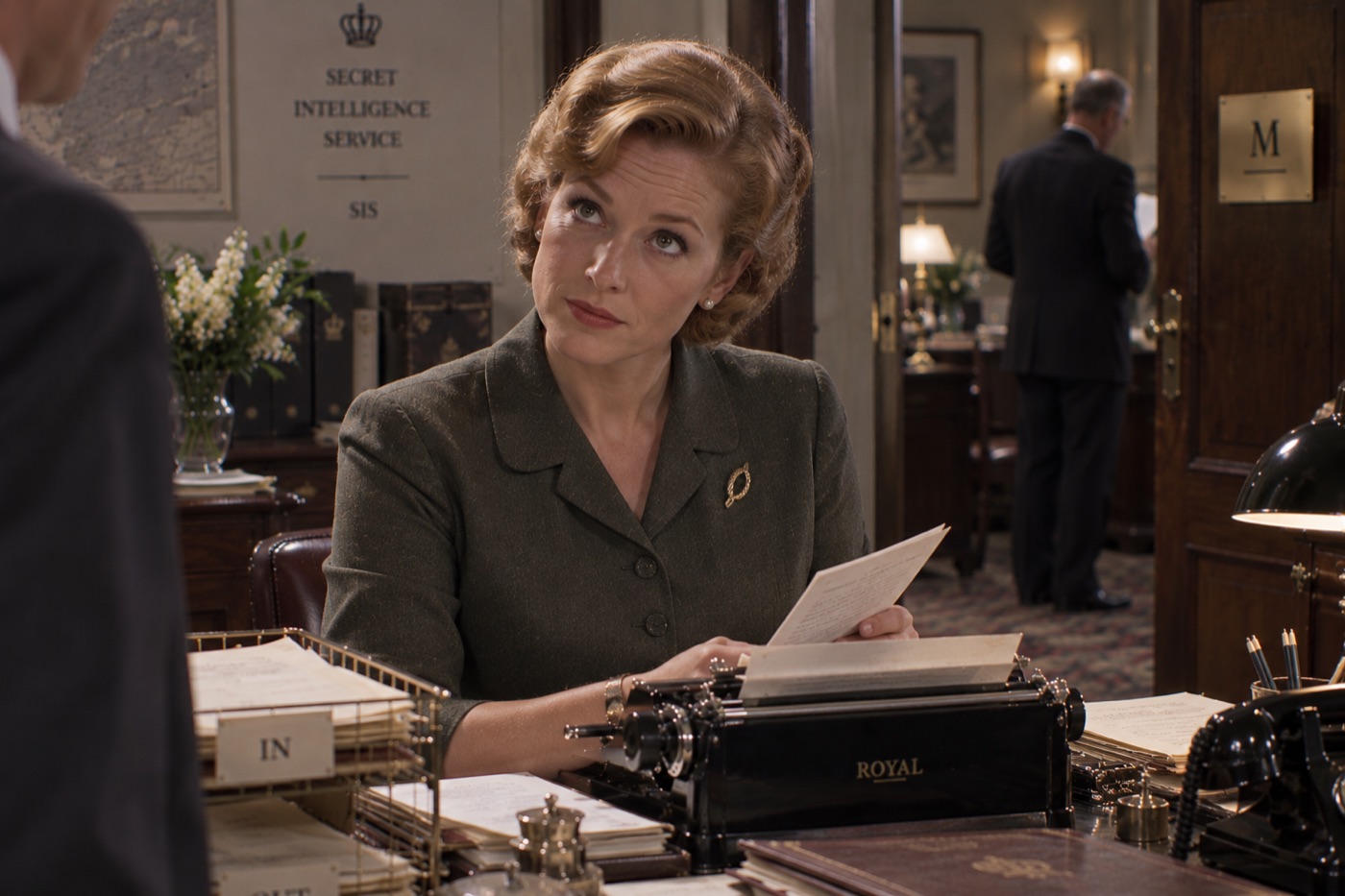
On the page: Introduced in Casino Royale (1953); further glimpses in Moonraker and Thunderball.
Moneypenny is a warning against overconfident reconstruction. Fleming gives the eyes an observant, questioning coolness. In Thunderball, they become motherly during an exchange with Bond. Neither observation establishes a fixed hair colour, an exact age or one particular facial shape. The original Casino Royale description occurs in a headquarters scene without Bond; it should not simply be presented as his private judgement. [1, 6]
On screen: Lois Maxwell, Caroline Bliss, Samantha Bond and Naomie Harris in the EON series. [17, 18]
The cinematic role supports a remarkable variety of appearances because recognition rests heavily on position and manner: the person outside M’s office, able to answer Bond on her own terms. Harris’s Eve adds field experience before taking the familiar office role. [18]
Ash-blond hair, fuller cheeks or an age of thirty-five are possible casting decisions, rather than recovered facts. Likewise, motherly eyes describe a moment of concern; they do not require a permanently maternal expression or a particular age.
Moneypenny therefore offers the series its most useful admission of freedom. A portrait can be persuasive without claiming that the text specifies its every feature. Her identity should emerge from alertness, work and the direction of her attention. Conventional glamour supplies much less information.
08 M
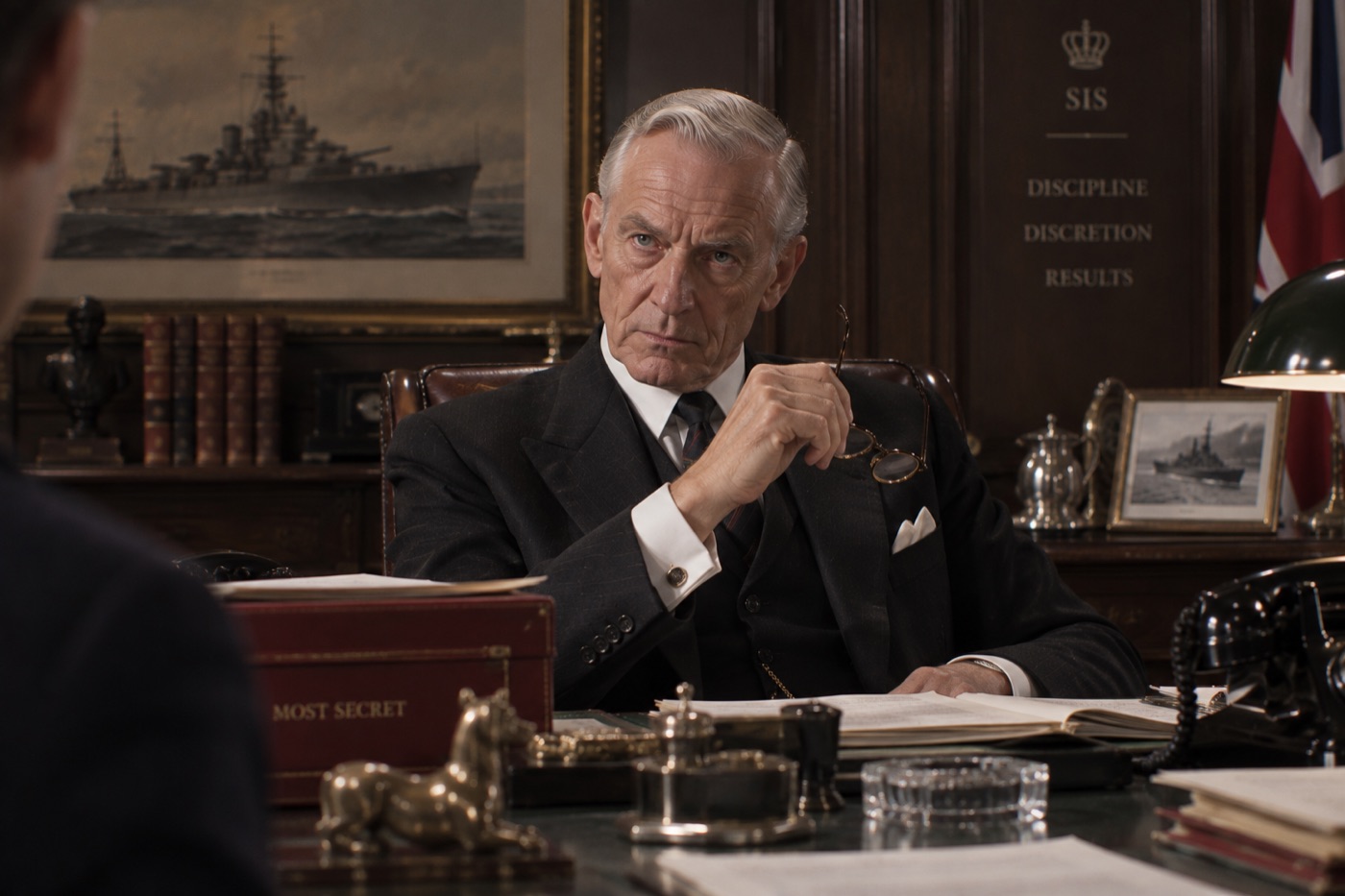
On the page: The recurring head of the Secret Service, ultimately identified as Vice Admiral Sir Miles Messervy.
The strongest literary cues are naval authority, a hard, appraising gaze and the bearing of an older commander. His face expresses experience and judgement. An exact age, hairline or set of facial measurements would demand more specific evidence than those broad but powerful literary cues provide. [19, 5]
On screen: Bernard Lee, Robert Brown, Judi Dench and Ralph Fiennes in the EON films. [20]
Lee is a natural comparison for Fleming’s older naval chief. Dench changes the visible identity while retaining the authority of the office; Fiennes’s Gareth Mallory brings a different institutional history. These are not all straightforward attempts to cast the same named admiral. The title M persists while the person and political world change.
An especially revealing literary episode concerns the Havelocks. M knew the murdered couple and was best man at their wedding. His involvement in their case creates an uncomfortable overlap between public duty and personal loyalty. [21] That is more interesting than reducing him to a machine for issuing orders.
The portrait works best as a conversation across a desk. The viewer should feel assessed, not welcomed to a grand office. Naval surroundings can establish a life before the Service, but too much decorative apparatus risks making M look like a collector. The person must remain the source of authority; the room merely helps us understand it.
09 Auric Goldfinger
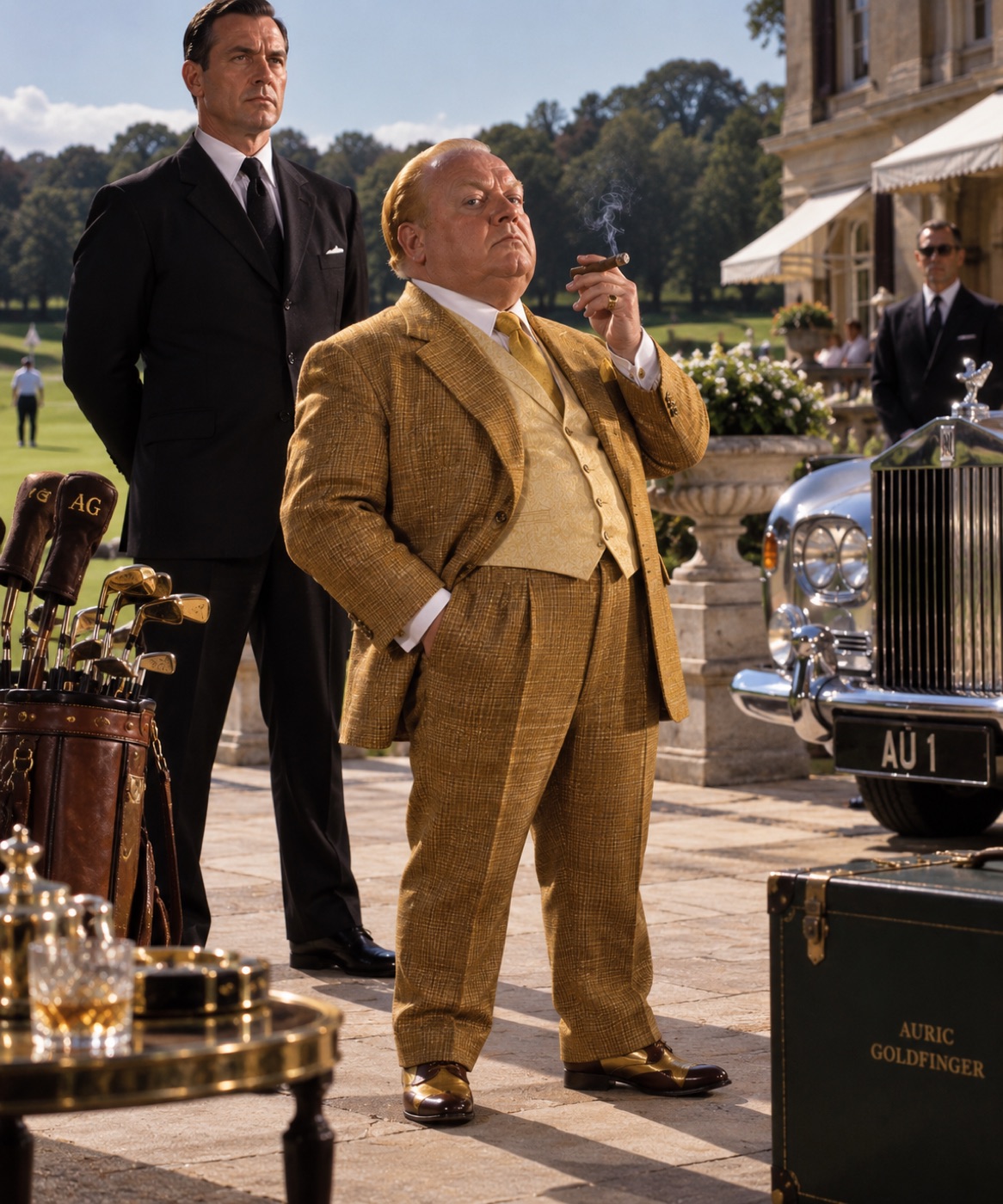
On the page: Goldfinger (1959).
The great surprise is his height: Bond estimates no more than five feet. A thick body, short legs and an enormous rounded head create an unsettling sense of disproportion. Fleming adds carroty crew-cut hair, light-blue eyes and a carefully cultivated tan. This is a more peculiar silhouette than the familiar film millionaire. [22]
On screen: Gert Fröbe in Goldfinger (1964), with his English dialogue dubbed by Michael Collins. [23]
Fröbe preserves the character’s substantial presence and complacent assurance, but the film does not reproduce the novel’s extreme shortness. A standing literary portrait is therefore more informative than a seated close-up: the difference needs a readable scale. Making the head merely rounder would miss the relationship between the parts of the body.
The golf setting is well chosen because it places wealth, competition and controlled manners within one image. It also allows a strikingly small figure to command a generous amount of space. That tension is the visual opportunity.
The most famous off-page anecdote concerns architect Ernő Goldfinger, whose surname Fleming appropriated. A threatened legal dispute ended in an agreement. [24] There is also a particularly cinematic twist to the casting: the voice many viewers associate with Fröbe is Collins’s. [23] The remembered villain was thus constructed from more than one performer even before costume, framing and editing completed him.
10 Emilio Largo
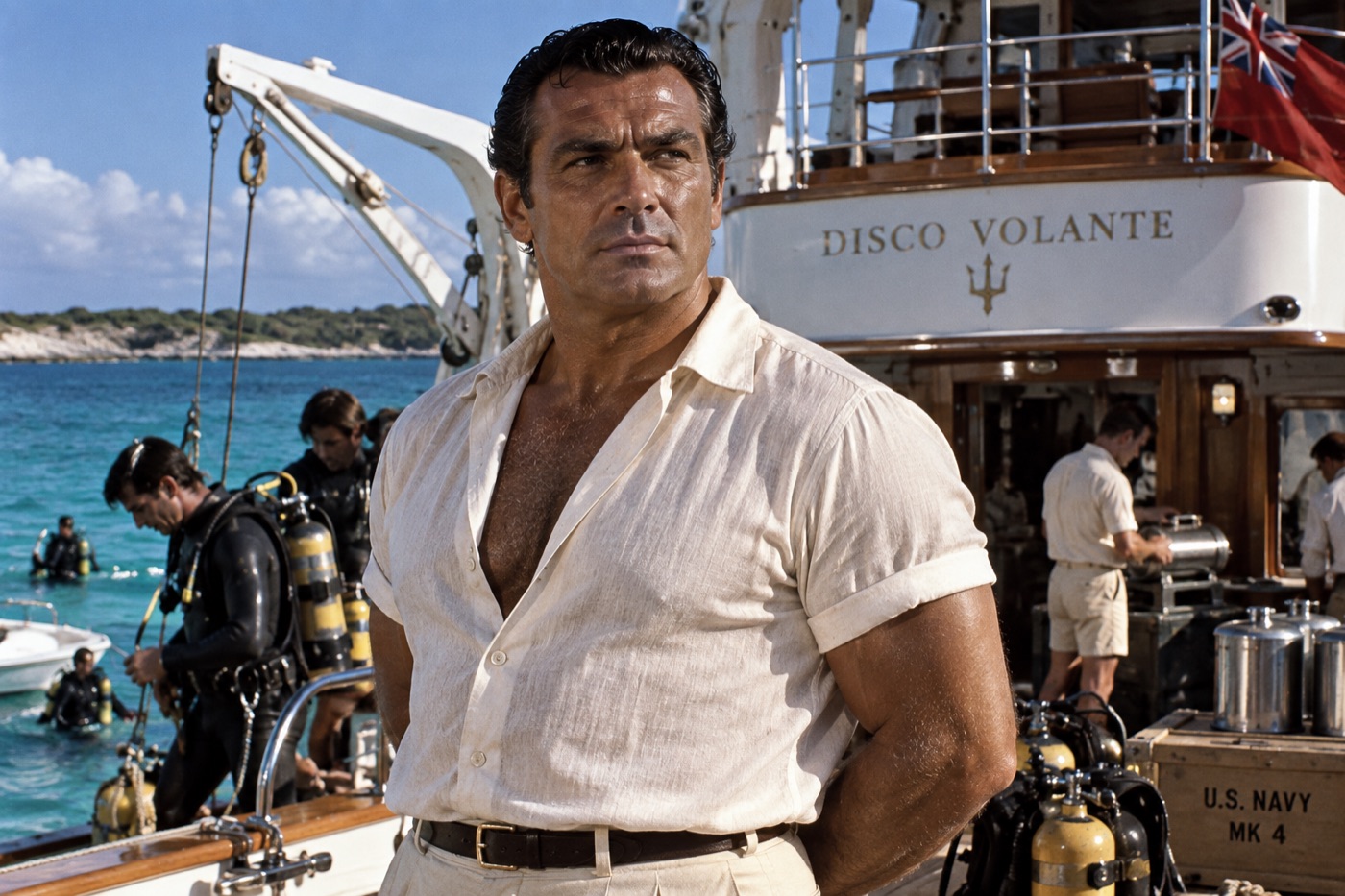
On the page: Thunderball (1961).
Largo has an exceptionally powerful, athletic body, carefully dressed black hair, long sideburns, brown eyes and notably large, hairy hands. His face suggests a Roman imperial or military profile. Crucially, he has no eyepatch. [6]
On screen: Adolfo Celi in Thunderball (1965). Klaus Maria Brandauer plays the reworked Maximilian Largo in Never Say Never Again (1983), a separate production. [25, 31]
Celi is closer to Fleming than a simple book-versus-film contrast might suggest. He supplies bulk, ease and an unmistakable capacity for command. The silver hair and black eyepatch nevertheless make the film’s silhouette instantly different. The patch is such efficient visual shorthand that it can dominate memory of the entire character. [31]
That is precisely why a literary portrait should let two unobstructed eyes meet the viewer. Removing the patch is only the beginning: hair, physical conditioning and the sense of an active maritime operator all matter.
The boat’s name, Disco Volante, offers a useful bridge between versions, while the presentation of its owner changes. [6, 25] Standing on deck with empty hands can communicate possession and competence without falling back on a generic luxury-villain pose. The aim is not to make Largo more brutish than Celi, but to recover the particular mixture of athletic force, vanity and polish that the prose suggests.
11 Colonel Rosa Klebb
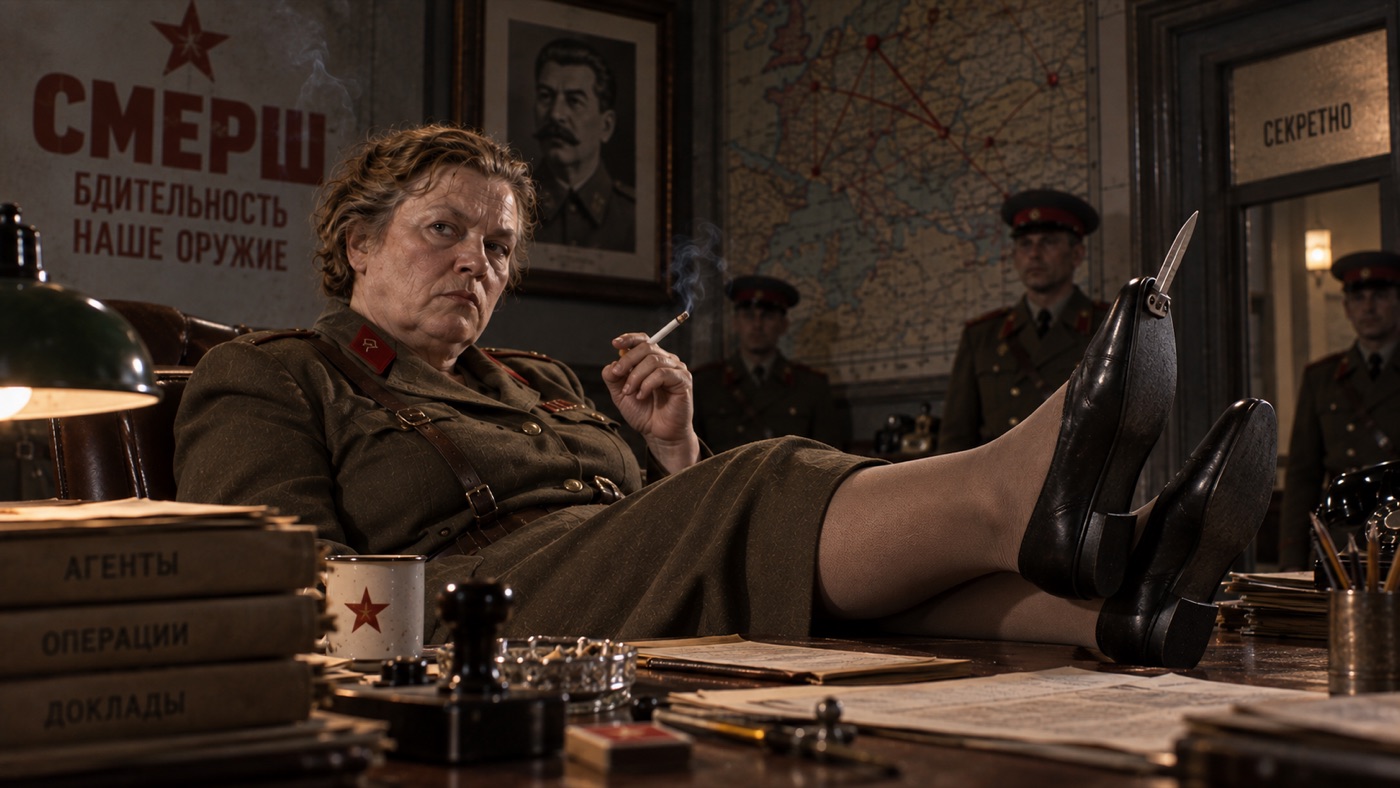
On the page: From Russia with Love (1957).
Klebb is approximately five foot four, squat and physically strong, with thinning orange hair pulled into a tight bun, yellow-brown eyes and square spectacles. Her estimated age is late forties. These details belong to a description filtered through Kronsteen’s distinctly hostile scrutiny. [2]
On screen: Lotte Lenya in From Russia with Love (1963). [26]
Lenya captures an alarming concentration of power in a physically unglamorous figure. The film does not require every grotesque detail in Fleming’s description to make her frightening. Her watchfulness, economy of movement and capacity to issue orders do much of the work.
The poisoned shoe blade is genuinely Fleming’s. So are other concealed implements: the official literary profile notes poisoned knitting needles. [27] It is therefore quite wrong to call the shoe exclusively a film invention. Equally, placing Klebb at a desk with her feet raised to expose it is a devised portrait pose, not a claim that Fleming staged that particular tableau.
A further distinction concerns affiliation: literary Klebb serves SMERSH; the film brings her into SPECTRE’s plot. [27, 26] The comparison reveals how easily an unforgettable physical prop can survive while a character’s institutional identity changes. Her portrait should make the person credible first. Enlarging every hostile adjective into a caricature would obscure the bureaucratic precision that makes her dangerous.
12 Donovan Red Grant
On the page: From Russia with Love (1957).
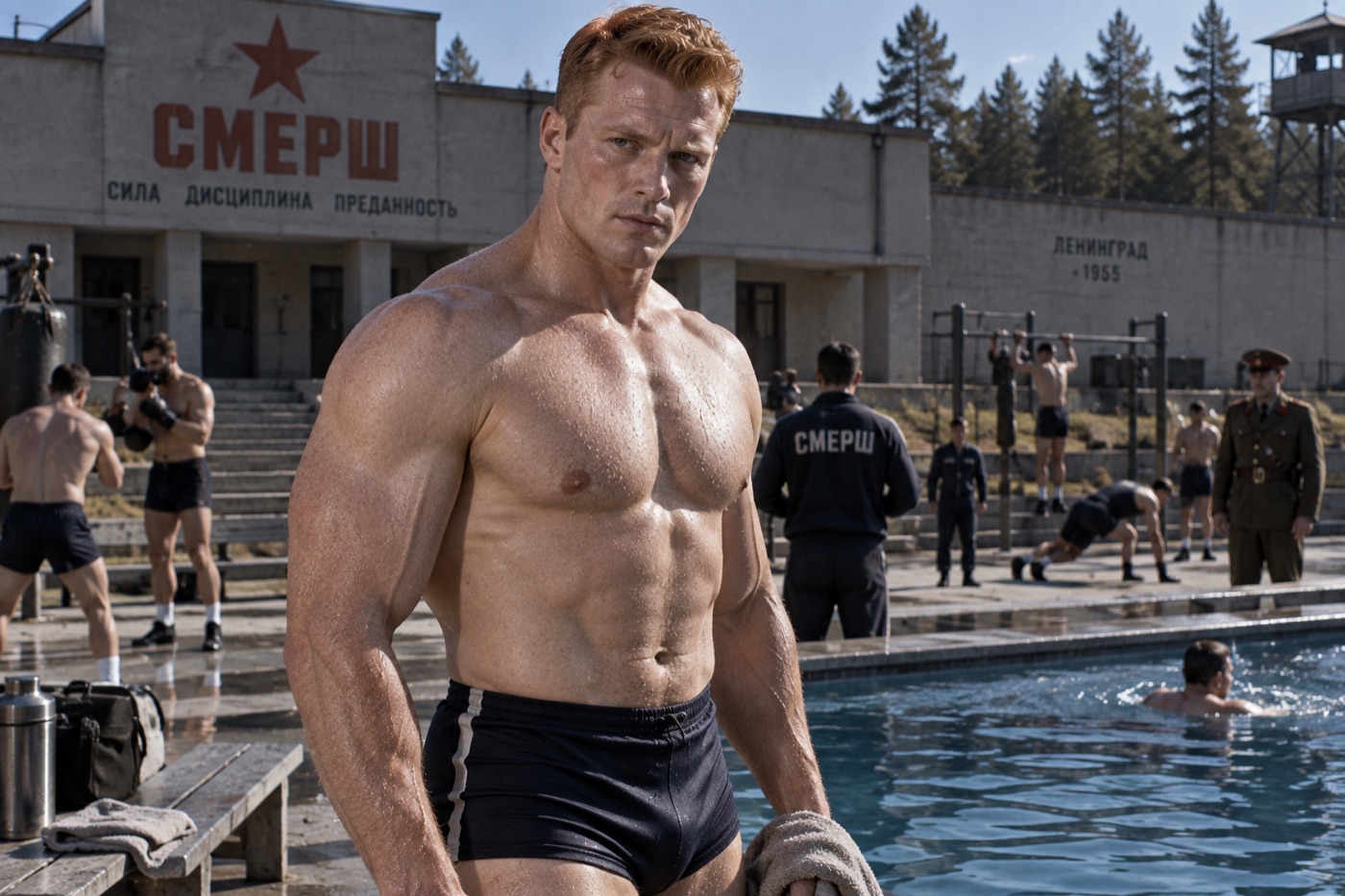
Grant has tight red-gold curls, very pale blue eyes and a superbly developed body. His naturally pale skin is sun-reddened in the opening sequence. The celebrated pool scene takes place at a Crimean villa, not at the intelligence school outside Leningrad mentioned later in his history. [2]
On screen: Robert Shaw in From Russia with Love (1963). [26]
Shaw’s fair-haired Grant retains the novel’s physical threat with extraordinary economy. He is credible as someone who can appear useful and reassuring before becoming terrifying. Compared with some of the more extravagant transformations elsewhere in the series, the core conception travels remarkably well.
The novel gives his murderous psychology considerably more room, including a connection between his urges and the full moon. That is Fleming’s fictional characterisation, not a medical explanation to endorse. [2] The film needs less of this background because Shaw can make a pause or a glance carry the suspicion.
The landscape portrait should be judged accordingly. Muscles alone cannot establish Grant; the absence of ordinary social warmth is just as important. A training-ground backdrop may be a plausible invention within his biography, but it must not be captioned as a faithful recreation of the opening pool scene. Here, the correction concerns geography and narrative context as well as the colour of his hair.
13 Dr Julius No
On the page: Dr. No (1958).
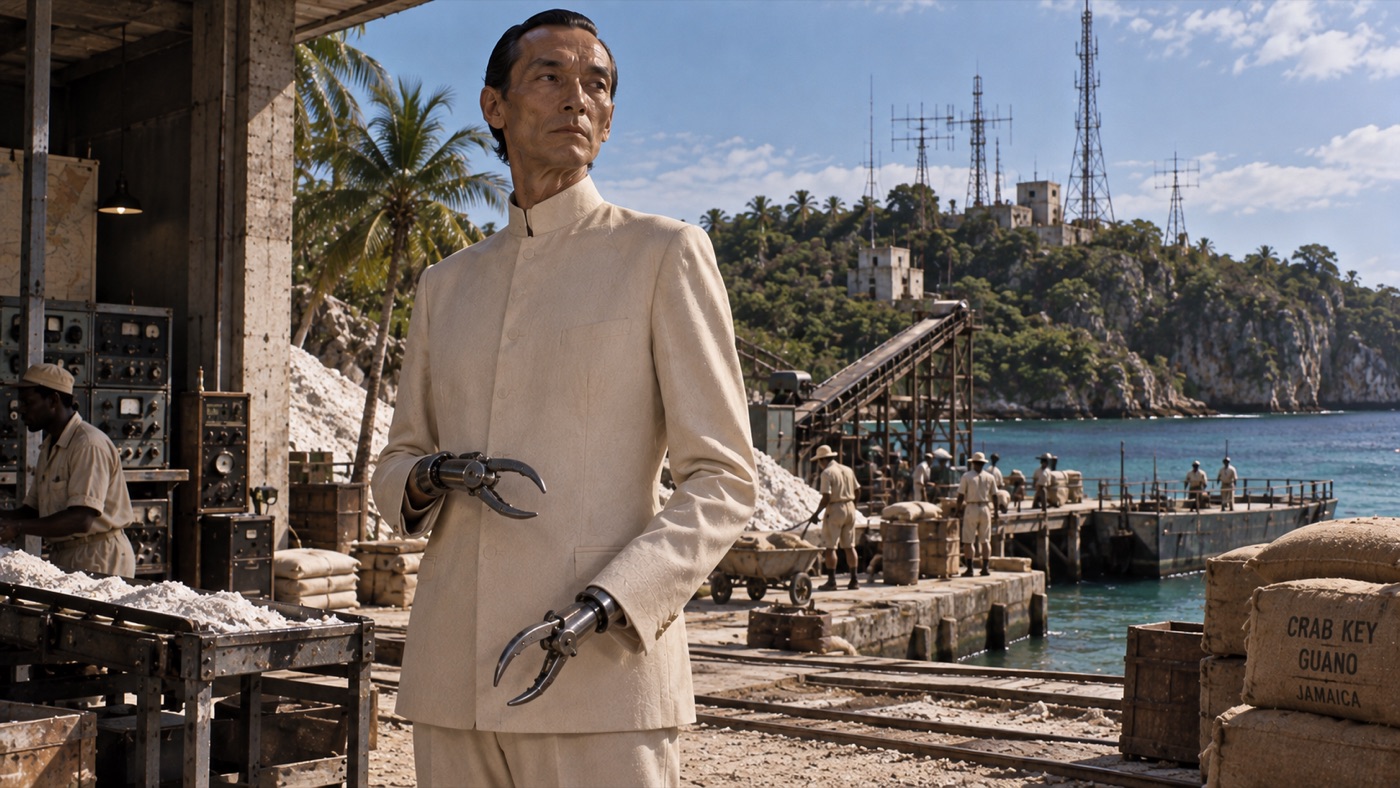
No is exceptionally tall and thin, with mechanical metal pincers replacing his hands. His Chinese and German parentage belongs to Fleming’s backstory. His strange physical outline should not be translated into ordinary human fingers painted silver. The pincers are a structural feature of the character, not an accessory. [28]
On screen: Joseph Wiseman in Dr. No (1962). [29]
Wiseman’s composed, almost ceremonious presence preserves the impression of a man separated from ordinary human contact. The film’s dark, hand-shaped prostheses, however, differ from the novel’s more visibly pincer-like apparatus. A portrait that simply copies the film’s costume and substitutes metallic fingertips would miss the most important distinction.
The setting requires equal care. Crab Key’s guano operation and interference with American missile activity belong to the literary conception. A Drax-style rocket standing on the island does not. [28] These villains occupy neighbouring books, but their machines and businesses are not interchangeable.
One of Fleming’s more extravagant inventions explains No’s survival of an attempted killing: his heart is on the right side of his body. [28] Such details reveal how much Gothic improbability already exists beneath the apparently technical espionage plot. The literary portrait need not add new machinery to make him strange. His height, stillness and replacement hands already supply a visual identity far more specific than the generic man behind a control panel.
14 Solitaire
On the page: Live and Let Die (1954).
Solitaire has pale skin, blue eyes and heavy blue-black hair reaching her shoulders. Fleming specifies high cheekbones, a wide mouth, a delicately cut jaw and a pointed nose. The expression carries self-possession and will, not simply dreamy vulnerability. Mr Big uses her apparent ability to tell whether someone is lying. [5]
On screen: Jane Seymour in Live and Let Die (1973). [16, 32]
Seymour’s dark-haired beauty is less of a physical rupture than several villain castings. The larger change is the dramatic presentation of her gift. Tarot structures the film’s relationship between Solitaire, Kananga and Bond, including the Lovers card. [32]
It is easy to import that memorable imagery back into the novel. The book’s interrogation scene works through her observation of Bond, without a tarot reading. [5] Cards in a literary-inspired portrait therefore bring in a film association; they should not be presented as a reconstruction of that passage.
An interpretation that moves partway towards Seymour’s appearance remains an artistic choice. It can be persuasive precisely because the film preserves some of Fleming’s broad contrasts. Solitaire’s visual identity can combine textual features with a chosen casting interpretation, provided the reader can see where the evidence ends and the reconstruction begins.
15 Judy Havelock
On the page: The short story For Your Eyes Only, collected in 1960.
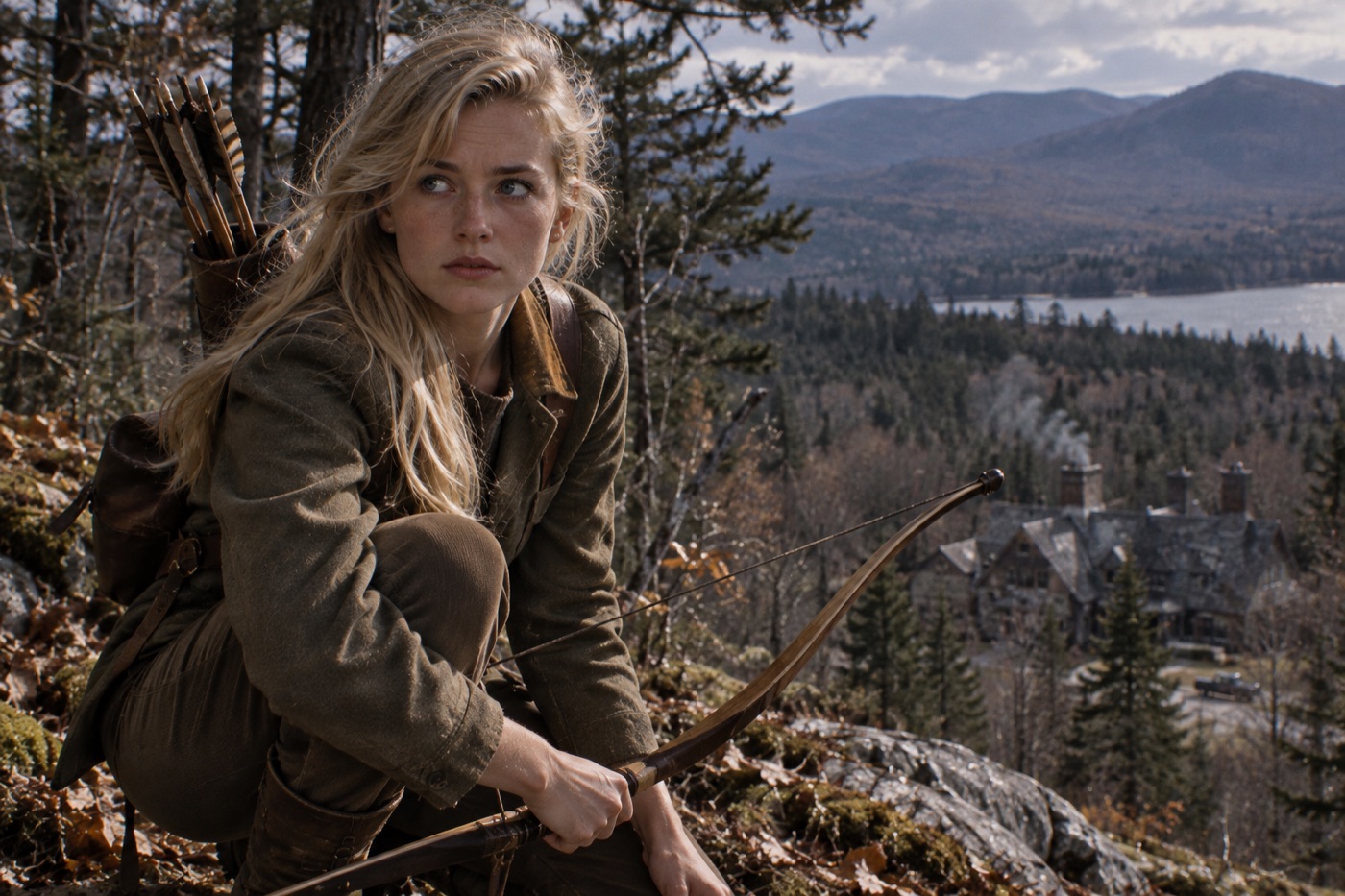
Her name is Judy Havelock. Her hunting licence gives her age as twenty-five; she has pale-blond hair and silver-grey eyes. In the woods she wears battered olive-green clothing and uses goldenrod to conceal her bright hair. Scratches and a bruised cheek make the encounter markedly less polished than a fashion portrait. [21]
On screen: Carole Bouquet as Melina Havelock in For Your Eyes Only (1981). [33]
Melina is a reworked counterpart, not Judy merely played by a brunette. The film preserves a daughter’s determination to avenge her parents while changing name, setting and appearance. Bouquet’s long dark hair becomes one of the film’s strongest visual signatures. The film also replaces Judy’s bow with a crossbow. [33]
The hunting licence is an unusually useful piece of evidence: a small documentary object settles an age that a general impression of youth could easily obscure. Twenty-five and silver-grey are firmer anchors than an approximate “young blonde.” [21]
This is an ideal portrait for establishing individual identity through action and environment. Practical clothing, deliberate concealment and an archer’s concentration say more than glamorous lighting alone. The comparison with Bouquet should remain precise and generous: both characters possess purpose, but the fair-haired young woman moving through a Vermont landscape belongs to a different visual and narrative world from Melina’s Mediterranean revenge story.
16 Vesper Lynd
On the page: Casino Royale (1953).
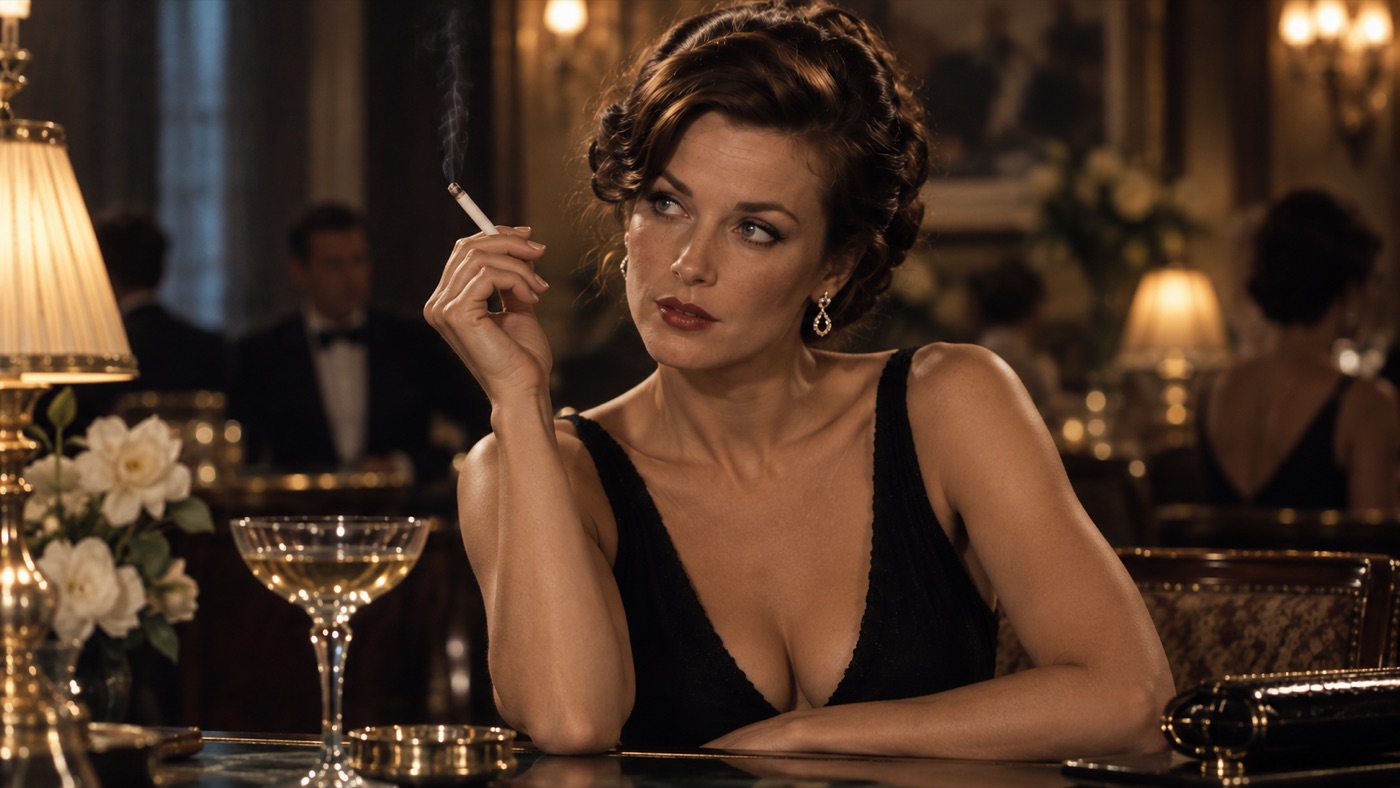
Vesper’s hair is very black, cut square and low at the nape; her widely spaced eyes are deep blue. The clear line of her jaw and the directness of her look give the beauty a particular structure. These are firmer identifying features than a general instruction to create an elegant woman. [1]
On screen: Eva Green in Casino Royale (2006); Ursula Andress in the separate 1967 comedy. [34, 30]
Green retains the powerful contrast of dark hair and light eyes while using longer styling, costume and expressive changes to create a recognisably modern screen presence. Her performance makes intelligence and emotional guardedness visible. Fidelity here is not solely a question of the correct haircut.
The professional role changes: literary Vesper comes from the intelligence service’s Station S, while the 2006 film makes her a Treasury representative overseeing the money. [35, 34] That gives the screen relationship an immediate contest over trust, authority and judgement. She is not simply sent along to decorate the casino scenes.
Her name supplies a quieter anecdote. Fleming links it to her birth on a stormy evening, with the Latin association of evening itself. [35] The portrait should retain that sense of a distinct person who keeps something in reserve. Giving Vesper, Solitaire and Moneypenny the same face with different hair would erase precisely the differences that make the literary comparison worth attempting.
17 Le Chiffre
On the page: Casino Royale (1953).
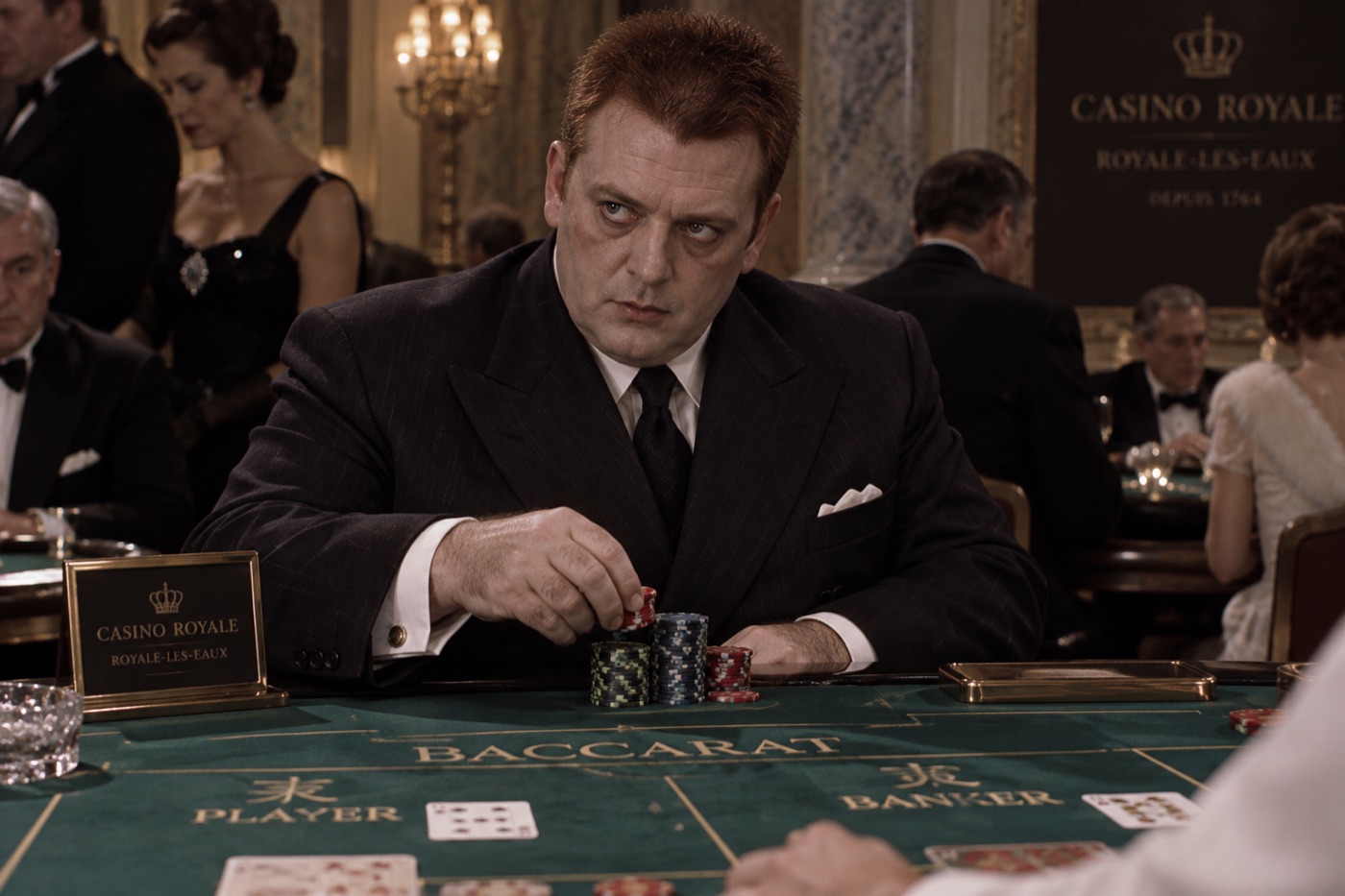
Le Chiffre’s dossier gives a man of about forty-five, 5 ft 8 in tall and eighteen stone in weight. He is pale, with red-brown brush-cut hair and very dark eyes whose surrounding whites are conspicuous. The effect is far removed from the lean outline of the best-known modern screen incarnation. [36]
On screen: Mads Mikkelsen in Casino Royale (2006); Peter Lorre in the 1954 television adaptation and Orson Welles in the separate 1967 comedy. [36]
Mikkelsen makes a slim, controlled financier frightening through concentration and suppressed panic. His bleeding eye is a screen invention, not a feature that should be added to a literary reconstruction. Welles’s physical presence is closer to the book’s heaviness, although the comic film surrounding him makes simple claims of greater fidelity misleading. [36]
The casino game is equally important. Fleming’s confrontation is baccarat; the 2006 film turns it into a poker tournament. [1, 34] Chips alone cannot establish which game an illustration shows. The rules, dealing and table arrangement have to carry that distinction.
Behind the name lies another small piece of self-erasure. The literary character adopts Le Chiffre after appearing as a displaced person with an uncertain past; the name reduces him to a number. [37] His immaculate clothes suggest control, while the gambling exposes desperation. That tension is more revealing than treating him as an effortlessly omnipotent banker. He is dangerous, but he urgently needs to win.
18 Oddjob
On the page: Goldfinger (1959).
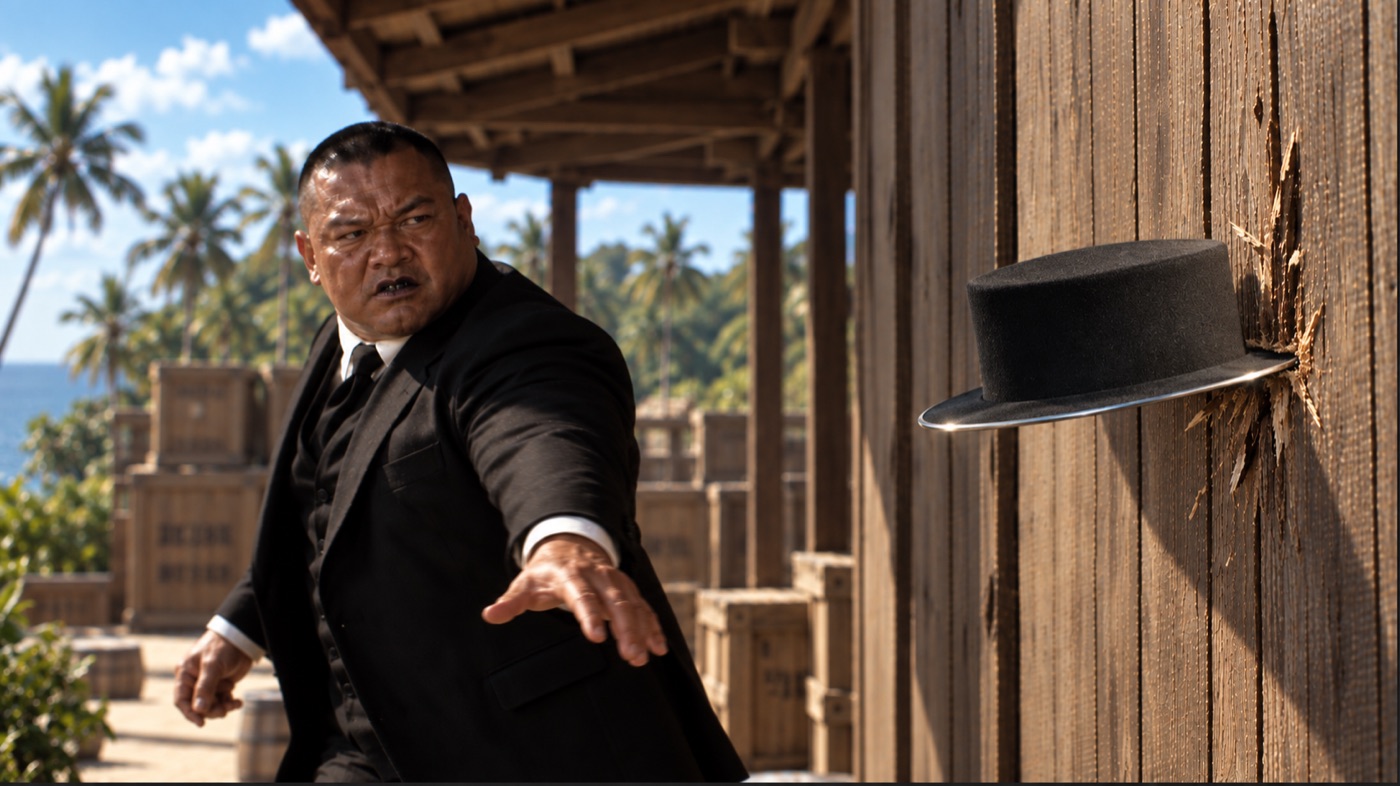
Oddjob’s physical identity rests on an immense torso, formidable arms, heavily conditioned hands and blackish teeth. The text makes his body itself a weapon. A precise height of 5 ft 6 in is not supported by the cited description; the demonstrable facts are his mass, strength and extraordinary bodily conditioning. [22]
On screen: Harold Sakata in Goldfinger (1964). [23]
Sakata provides one of the series’ closest matches in sheer bodily conviction. His stillness is part of the effect: he does not need to advertise strength continuously. The actor was also an Olympic silver medallist and professional wrestler, a background that makes the casting especially apt. [38]
The bowler weapon comes from Fleming, but its demonstration needs a correction. In the novel, Oddjob throws it into wooden panelling. The decapitated stone statue is the film’s memorable demonstration. A portrait with that statue is therefore borrowing cinematic imagery even if the hat itself is literary. [22, 38]
This distinction is a useful way to end the gallery. Adaptation rarely divides neatly into an entirely faithful character and an entirely invented one. The same figure can retain physique, costume and weapon while changing the scene that makes them unforgettable. Oddjob also shows why textual fidelity requires judgement: Fleming’s dehumanising racial language should be identified as prejudice, rather than translated into ever more exaggerated anatomy.
Seeing the characters again
The most revealing discoveries are not always the biggest changes. A removed eyepatch, an altered hair colour, an age printed on a hunting licence or a description attached to the wrong observer can change the reading of an entire portrait. Details matter because they anchor interpretation; they do not eliminate it.
There is no camera hidden inside Fleming’s sentences. Some characters arrive almost as dossiers, others through fleeting impressions, and those impressions can be coloured by hostility, attraction or prejudice. A responsible reconstruction must sometimes say “the text does not settle this.” Moneypenny particularly benefits from that honesty.
The films demonstrate a different kind of authorship. A performer can make a role definitive without matching a description, while a costume designer can contribute a feature that eventually feels inseparable from the name. Comparing the two is most rewarding when it neither treats the films as errors nor presents invented portrait details as quotations from a novel.
What emerges is an alternative cast with its own range of bodies, ages, expressions and ways of occupying a room. The value of the project lies in preserving that range. These eighteen people can inhabit one cinematic world without looking as if they were all produced from one face.
Sources and reading notes
Primary literary references below identify chapters or scenes rather than page numbers, which vary by edition. Online transcriptions were used to locate and check descriptions; interpretive comparisons are this article’s critical judgements. Publisher profiles are supplementary: some cover later continuation fiction as well as Fleming, so their additional biographical details have not automatically been treated as original-novel facts. Sources checked 21 September 2026.
[1] Ian Fleming, Casino Royale (1953), chapters 2–5, 7–9. Primary text. Used for Bond’s mirror scene, the Carmichael comparison, Leiter, Moneypenny and Vesper.
[2] Ian Fleming, From Russia with Love (1957), chapters 1–2, 6–8. Primary text. Used for Bond’s dossier, Grant’s appearance and location, and Klebb’s appearance.
[3] EON, The films. Filmography and principal Bond casting.
[4] EON, Focus on Felix. Leiter casting and the screen shark attack.
[5] Ian Fleming, Live and Let Die (1954), chapters 2, 7 and 14. Primary text. Used for Mr Big, Solitaire’s introduction, M and Leiter’s injuries. The interrogation supplies no tarot reading.
[6] Ian Fleming, Thunderball (1961), Moneypenny’s early office conversation, the SPECTRE meeting, Largo’s introduction and Leiter’s arrival. Primary text.
[7] Ian Fleming Publications, Ernst Stavro Blofeld. Height, changing identities and shared birthday.
[8] EON, Spotlight on Blofeld. Casting, the concealed face, cat and later incarnations.
[9] Ian Fleming, Moonraker (1955), chapter 4. Primary text. Drax’s appearance at Blades.
[10] EON, Moonraker and Focus of the week Hugo Drax. Lonsdale, settings and plot.
[11] Ian Fleming Publications, Sir Hugo Drax. Literary identity, rocket scheme and name source.
[12] Ian Fleming, The Man with the Golden Gun (1965), chapters 3 and 5–9. Primary text. Scaramanga’s dossier and Jamaican setting.
[13] Ian Fleming Publications, Francisco Scaramanga. Circus background, identifying detail and weapon.
[14] EON, The Man with the Golden Gun. Christopher Lee and the 1974 film.
[15] Ian Fleming Publications, Buonaparte Ignace Gallia. Measurements, name, criminal network and Baron Samedi association.
[16] EON, Live and Let Die. Kotto, Seymour, Kananga’s disguise and heroin plot.
[17] Miss Moneypenny, secondary casting reference. Used only for the sequence of performers.
[18] EON, Focus of the week Moneypenny. Harris’s Eve and her field role.
[19] Ian Fleming Publications, M. Name, naval rank and office; continuation-era details excluded from the portrait claims.
[20] M in the Bond series, casting reference; relevant EON film credits provide the primary cast records.
[21] Ian Fleming, “For Your Eyes Only” (1960), M’s briefing and Bond’s encounter with Judy. Primary text. Her licence explicitly gives twenty-five; her eyes are silver-grey.
[22] Ian Fleming, Goldfinger (1959), Goldfinger’s introduction, “The Odd-Job Man” and the torture sequence. Primary text. Appearance and hat demonstration.
[23] EON, Goldfinger. Fröbe, Michael Collins’s dubbing and film credits.
[24] Ian Fleming Publications, Auric Goldfinger. The architect and threatened litigation.
[25] EON, Thunderball. Celi, Largo and Disco Volante.
[26] EON, From Russia with Love. Lenya, Shaw and SPECTRE’s plot.
[27] Ian Fleming Publications, Colonel Rosa Klebb. SMERSH position and concealed weapons.
[28] Ian Fleming Publications, Dr Julius No. Literary body, pincers, backstory and Crab Key operation.
[29] EON, Dr No. Wiseman and the first EON film.
[30] Casino Royale adaptations and early casting. Secondary reference for the 1954 television adaptation and separate 1967 comedy.
[31] Emilio Largo. Secondary comparison of Celi’s screen appearance and Brandauer’s renamed counterpart.
[32] EON, Focus of the week Solitaire. The film’s tarot motif and Lovers card.
[33] EON, For Your Eyes Only. Bouquet, Melina, crossbow and adaptation background.
[34] EON, Focus of the week Vesper Lynd and Casino Royale. Green’s character and Treasury role.
[35] Ian Fleming Publications, Vesper Lynd. Station S and the origin of her first name.
[36] Le Chiffre. Secondary comparison of the novel’s dossier and the three screen portrayals; physical details checked against Casino Royale, chapter 2, source [1].
[37] Ian Fleming Publications, Le Chiffre. The adopted name and uncertain origin.
[38] EON, Focus of the week Goldfinger. Sakata’s sporting background and production history. Hat demonstration also compared with Goldfinger (1964).