13 Dr Julius No
On the page: Dr. No (1958).
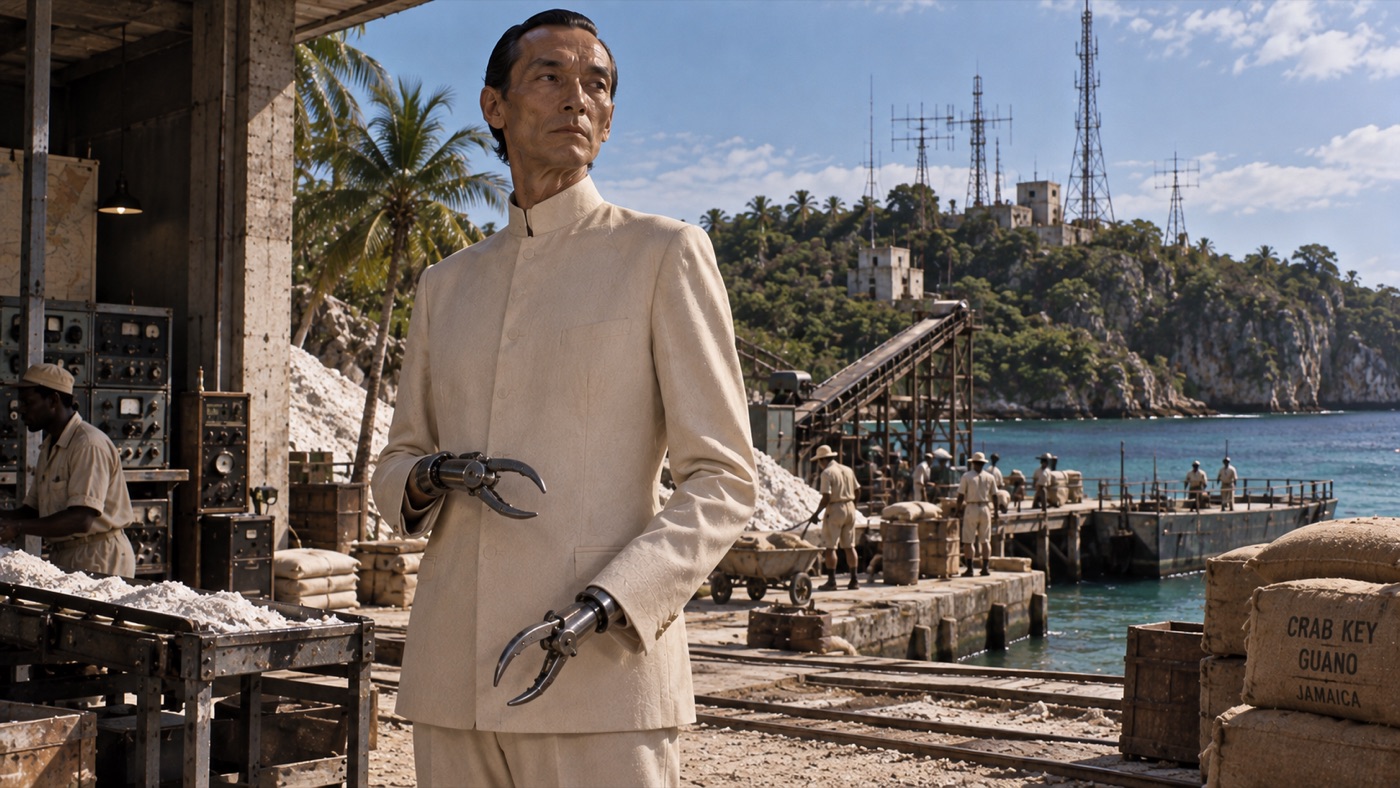
No is exceptionally tall and thin, with mechanical metal pincers replacing his hands. His Chinese and German parentage belongs to Fleming’s backstory. His strange physical outline should not be translated into ordinary human fingers painted silver. The pincers are a structural feature of the character, not an accessory. [28]
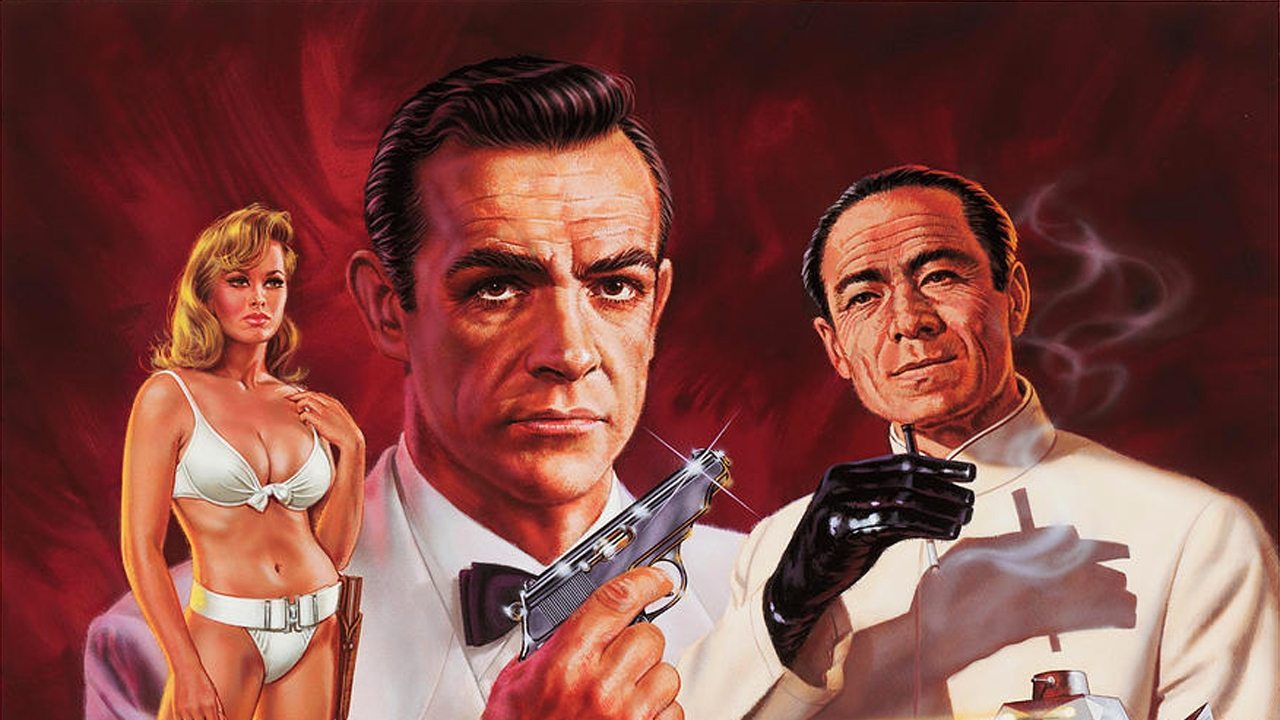
On screen: Joseph Wiseman in Dr. No (1962). [29]
Wiseman’s composed, almost ceremonious presence preserves the impression of a man separated from ordinary human contact. The film’s dark, hand-shaped prostheses, however, differ from the novel’s more visibly pincer-like apparatus. A portrait that simply copies the film’s costume and substitutes metallic fingertips would miss the most important distinction.
The setting requires equal care. Crab Key’s guano operation and interference with American missile activity belong to the literary conception. A Drax-style rocket standing on the island does not. [28] These villains occupy neighbouring books, but their machines and businesses are not interchangeable.
One of Fleming’s more extravagant inventions explains No’s survival of an attempted killing: his heart is on the right side of his body. [28] Such details reveal how much Gothic improbability already exists beneath the apparently technical espionage plot. The literary portrait need not add new machinery to make him strange. His height, stillness and replacement hands already supply a visual identity far more specific than the generic man behind a control panel.