04 Sir Hugo Drax
On the page: Moonraker (1955).
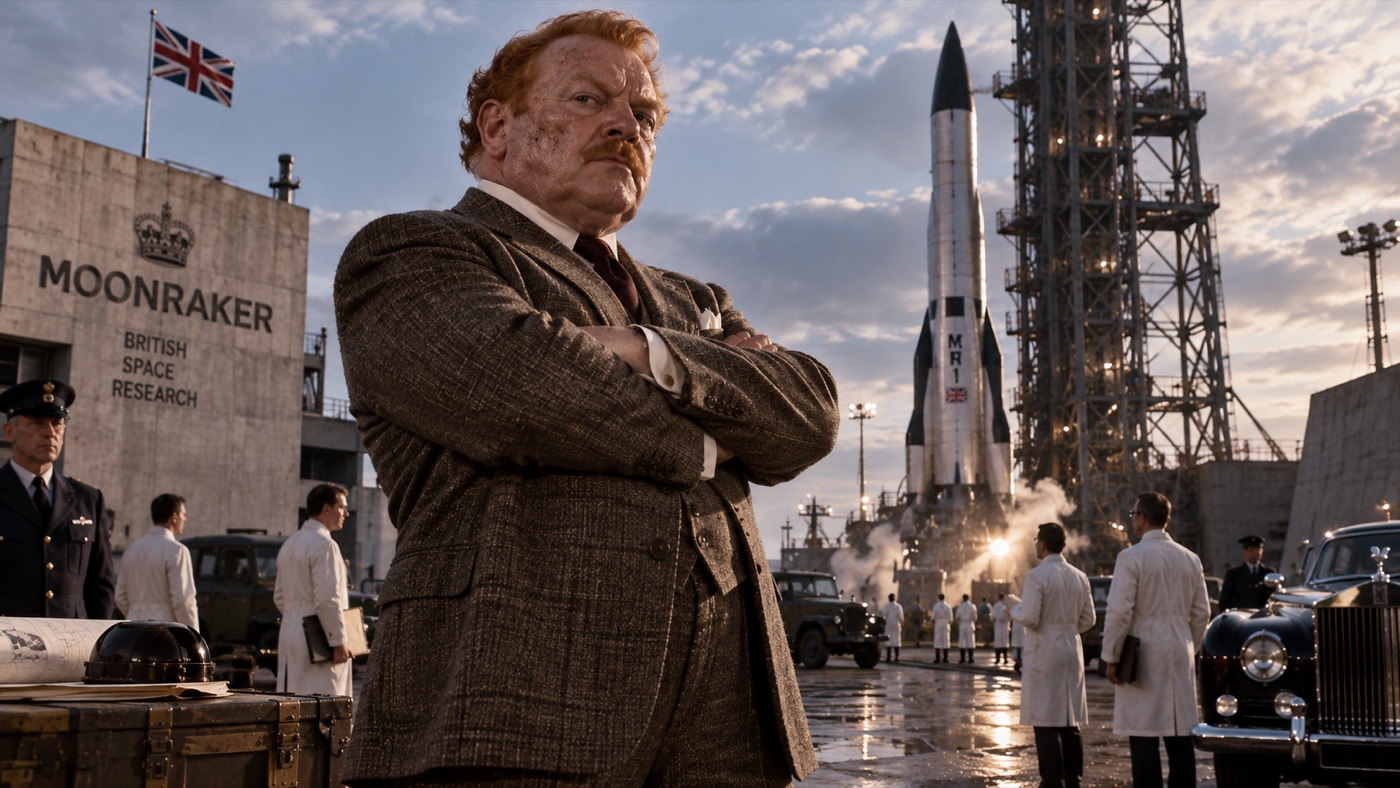
Drax is broad-shouldered and physically imposing, with reddish hair, a bushy reddish moustache and conspicuous facial damage. Fleming describes reconstructive surgery on the right side of his face and an enlarged, bloodshot right eye. Hair partly conceals the damage. His noisy, bullying presence is almost the opposite of immaculate restraint. [9]
On screen: Michael Lonsdale in Moonraker (1979). [10]
Lonsdale’s Drax is memorable for stillness, dry delivery and cultivated superiority. The literary figure’s bluster becomes something closer to aristocratic boredom. This is one of the clearest cases in which casting and performance jointly remake a character: the difference would remain even if both men wore the same suit.
The stories are equally far apart. Fleming’s supposed British benefactor is a concealed Nazi preparing a rocket attack on London; the film places its industrialist within a space-age extermination scheme. [11, 10] A rocket behind the portrait is consequently appropriate only if it belongs to the British missile project, not to the film’s shuttle fleet.
The name itself has an unexpectedly naval connection. Ian Fleming Publications identifies Admiral Sir Reginald Aylmer Ranfurly Plunkett-Ernle-Erle-Drax as its source. [11] That extravagant real name suits a fictional identity built to command unquestioning respect. The portrait’s challenge is to show the public benefactor and the aggressive man behind him occupying the same face.