Somewhere in an alternative cinematic universe, Timothy Dalton made a third Bond film.
Audiences bought their tickets, the gun barrel rolled across the screen, and the man who had just dismantled a drug empire in Licence to Kill returned with a rather different assignment.
His cover? A hang-gliding competition.
His destination? A weapons facility.
The complication? Security had apparently decided that armed guards were becoming a little old-fashioned.
This was the opening of a genuine screenplay developed for Dalton's next adventure. The film never reached production, but enough survives to make it one of the most intriguing roads the Bond series never travelled.
A proper screenplay, not a pub conversation
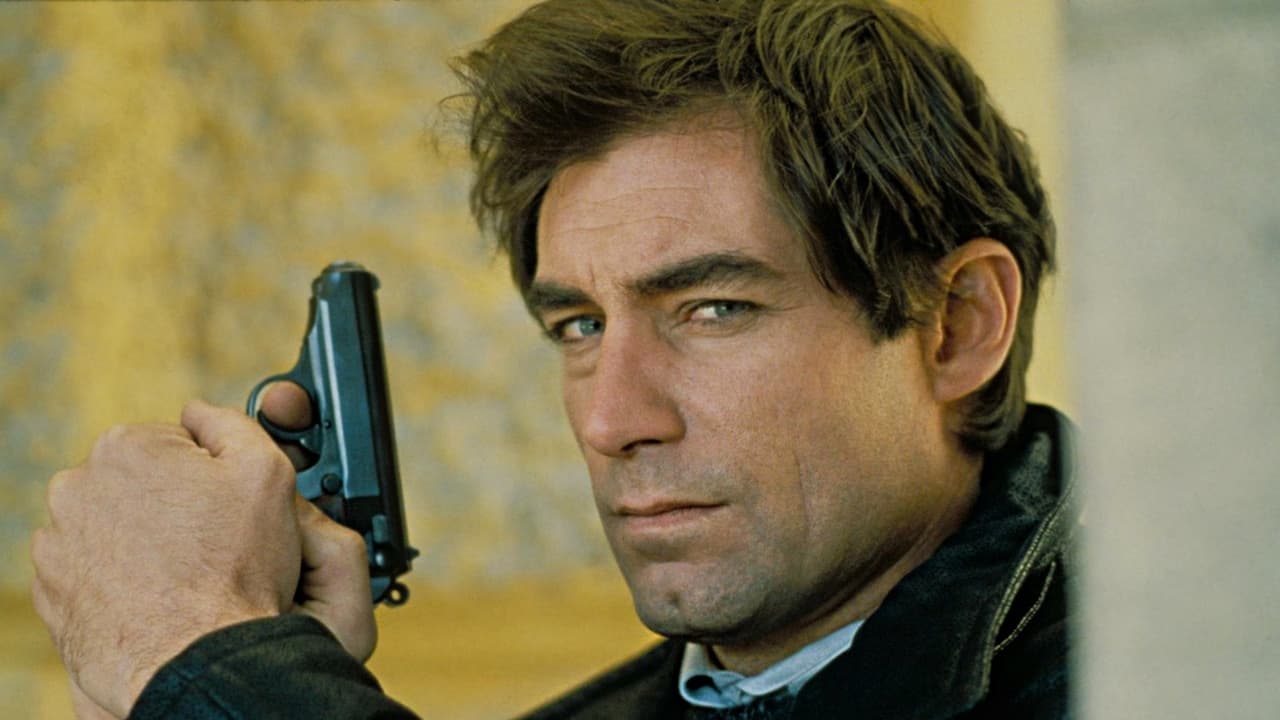 Image: TMDB
Work on the next Bond adventure gathered momentum after Licence to Kill, with a new film planned for 1991.
Michael G. Wilson and Alfonse Ruggiero Jr. developed the story, initially in a treatment dated May 1990. A full screenplay followed: 135 pages, dated 7 July 1990.
That July draft is the version with the hang-gliding opening. Later work by William Osborne and William Davies changed aspects of the adventure, which explains why accounts of "Dalton's third film" sometimes describe different scenes.
There was no single, finished shooting script waiting for a director to call action. There was a developing project, with successive attempts to work out what Bond should do next.
And the answer, at this stage, involved considerably more machinery than Franz Sanchez had ever needed.
First prize, with optional sabotage
Bond enters a hang-gliding championship alongside Allison Ives, a skilled competitor recruited to help with the mission. The event provides cover for his arrival at a weapons installation, where he plants explosives and encounters a dangerous security robot.
He escapes, rejoins Allison and still manages to win the competition.
It is a gloriously cheeky opening. Most athletes would consider an international title a satisfactory afternoon. Bond fits in some industrial sabotage.
It also suggests a different balance for Dalton's third outing. The danger remains, but the setup leaves room for the absurd confidence that is such an essential part of 007: the assumption that saving the world should not interfere with collecting the trophy.
Something is flying the plane
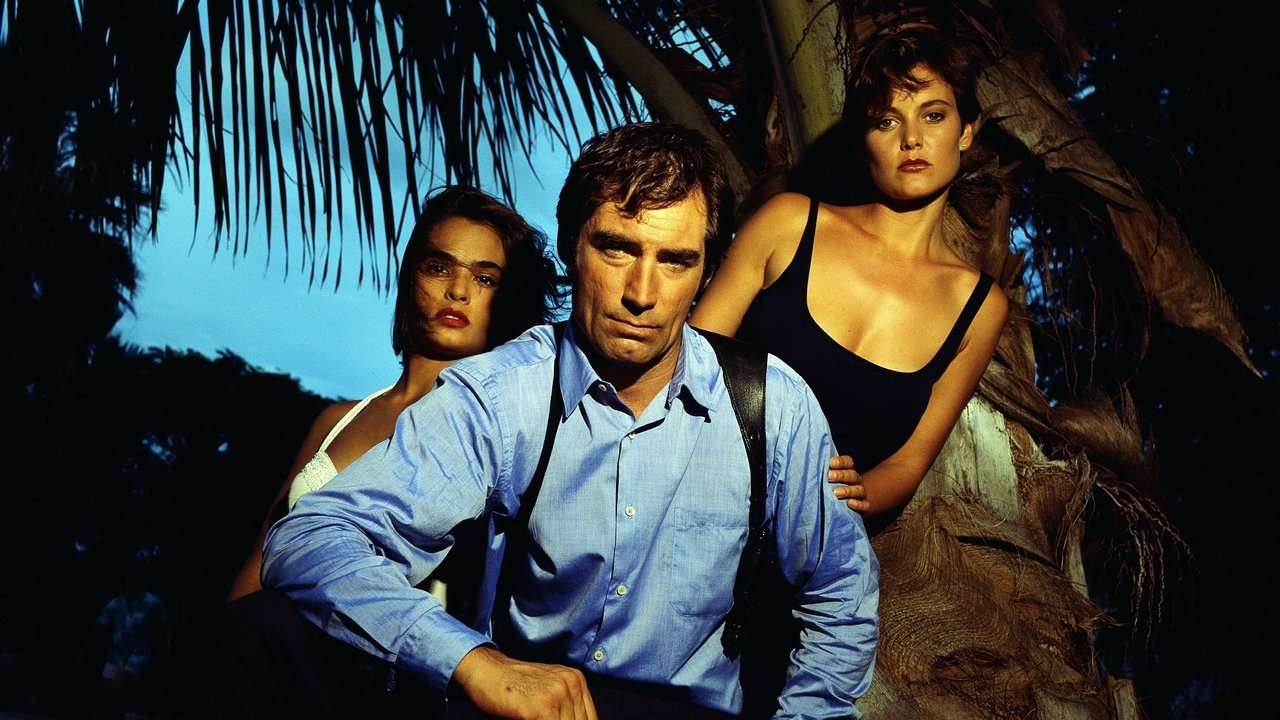 Image: TMDB
The main crisis begins with a British Harrier apparently malfunctioning. Its pilot ejects, but the aircraft subsequently flies into China and crashes into a village.
The incident threatens an already delicate relationship between Britain and China as the Hong Kong handover approaches.
Investigating the technology behind it takes Bond to Canada and Connie Webb, a CIA-trained freelance thief. An advanced superconductor becomes bait to draw her out.
Here the screenplay finds a promising threat: equipment can be made to betray the people who trust it.
For a modern reader, that idea has aged rather well. The fear beneath the gadgets is recognisable — a machine carrying national authority may actually be obeying somebody else.
Meet the man holding the remote
The investigation leads towards Hong Kong and Sir Henry Lee Ching, an electronics magnate whose expertise extends into sophisticated weapons and remote control.
His operations include using a robot to sabotage a Chinese nuclear facility. Bond, meanwhile, acquires allies in local intelligence officer Denholm Crisp and Chinese agent Mi Wai.
Sir Henry belongs to a particularly durable Bond tradition: the businessman whose commercial success has encouraged an unfortunate interest in international conflict.
What makes him interesting for Dalton is the distance between villain and violence. A criminal like Sanchez exercises power through personal loyalty and intimidation. A technology magnate can inflict destruction without entering the room — or even the country.
It would have given Dalton's physically committed Bond an enemy accustomed to doing his dirty work from a comfortable distance.
Q brings the company car
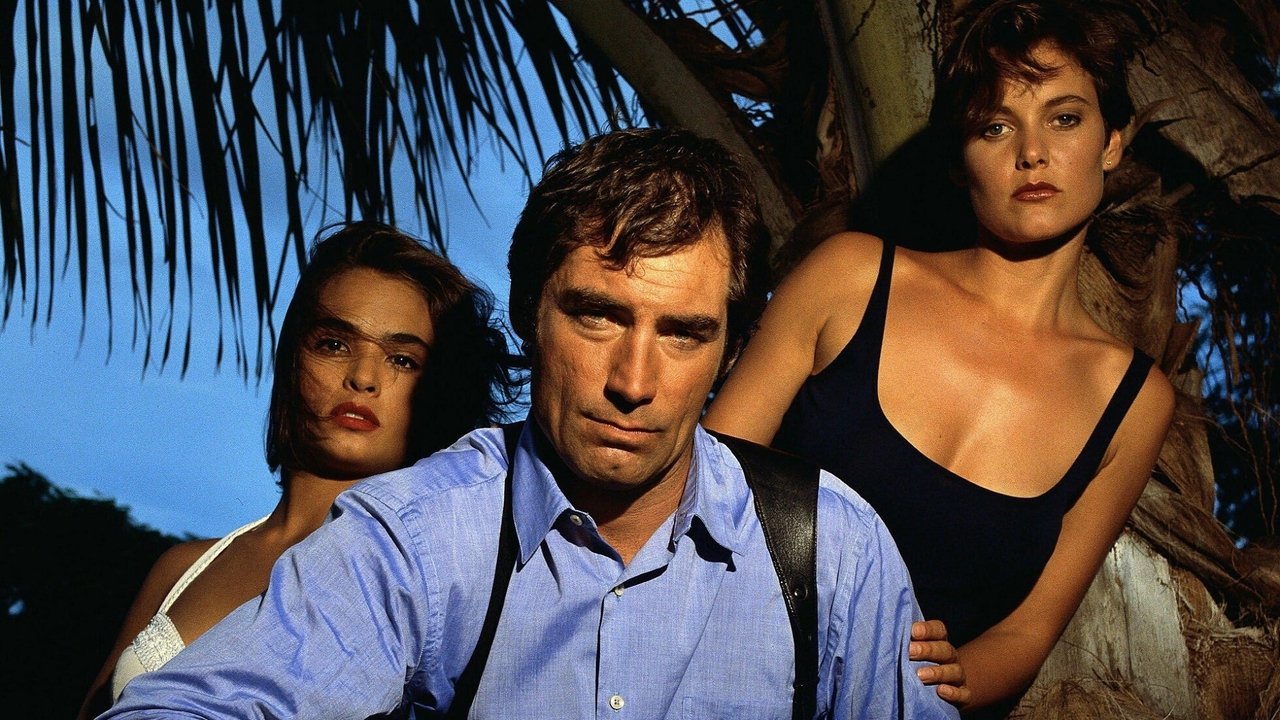 Image: TMDB
Q arrives with an Aston Martin DB5. Sir Henry responds with a remotely controlled armed car, pursuing Bond and Mi Wai.
Bond defeats the pursuit by driving over a cliff and ejecting with his passenger. The other car follows without enjoying the same escape arrangements.
There is something irresistible about putting Dalton into this sort of sequence. His intensity could give the danger weight, while the action itself embraces the extravagant engineering that audiences expect from Q Branch.
Whether that balance would have worked is part of the fascination. On paper, the project asks Dalton to carry a much more technologically fanciful adventure than either of his completed films.
The mission turns personal
Mi Wai subsequently dies in an attack that Bond survives. His colleagues believe he has been killed too, before an emotional reunion with Q reveals otherwise.
That is a crucial change of temperature.
The gadgets may be elaborate, but the story still makes room for loss and for the affection beneath Q's professional irritation. Imagining Dalton and Desmond Llewelyn playing that reunion is enough to make the missing film feel like a real deprivation.
A third outing could have developed their relationship further. Q's exasperation works best when we understand just how much he cares whether the troublesome customer comes back.
The penthouse has a serious plumbing problem
The climax brings Bond into Sir Henry's headquarters to rescue Connie. There he discovers that Nan, the villain's companion, is an android.
Meanwhile, Sir Henry is taking control of a British warship's missiles to attack an aircraft carrying Chinese military officials. A flooded penthouse and elevator shaft ultimately destroy his control equipment and prevent the attack.
Even then, he survives long enough for a final confrontation at Bond's hotel, where his targeting technology is turned against him.
An android reveal is a substantial leap for this incarnation of Bond. It could have been startling, ridiculous or both. Execution would have mattered enormously: design, effects, direction and Dalton's performance would determine whether audiences leaned forward or burst out laughing.
But the ending has a satisfying principle. A villain who trusts technology to extend his power discovers that it can also be used against him.
Bond would presumably consider that an adequate product review.
The title that acquired a life of its own
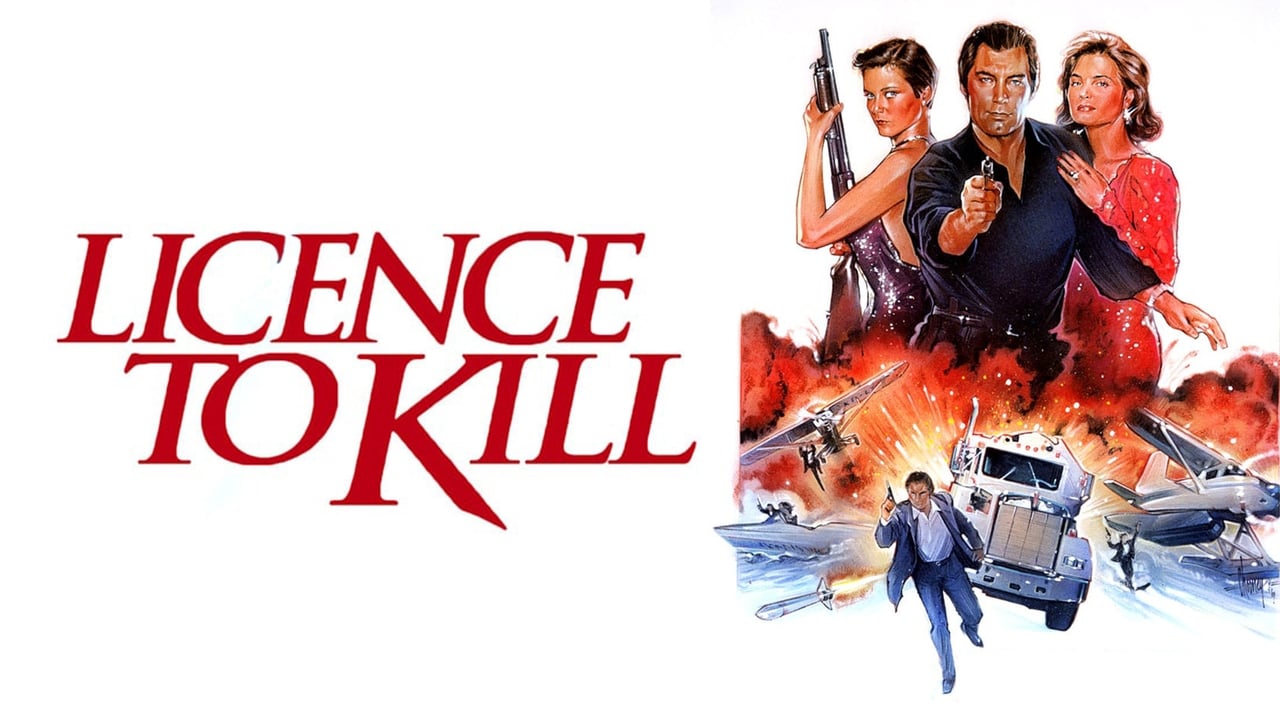 Image: TMDB
The project is frequently called The Property of a Lady, borrowing the title of an Ian Fleming short story.
It is an attractive name. It sounds unmistakably Bond, and it gives the missing film something more romantic than a production number.
However, the title's connection to the project has been challenged in research into its development. It should not be treated as an established official title.
Bond 17 is the safer name.
That distinction matters because an unmade film leaves plenty of empty space for other people to fill. Over time, suggested titles, imagined casts and later reconstructions can begin to look like production facts.
The screenplay is interesting enough without giving it a fictional premiere programme.
The villain Bond could not defeat
The project became entangled in legal and business disputes involving the producers and MGM/UA during the studio's turbulent ownership period.
Development could only go so far while the future of the franchise remained uncertain. The intended return slipped away, and the gap after Licence to Kill continued to grow.
Dalton eventually announced his departure in 1994 — at 48, five years after his last film. The series returned with Pierce Brosnan in GoldenEye the following year.
It is tempting to describe that film as Dalton's third adventure with a different actor inserted. The history is more complicated: the Hong Kong and robotics project discussed here was a distinct story, although development of the next Bond film eventually led to GoldenEye.
The missing Dalton adventure was defeated by circumstances far less cinematic than its screenplay.
No missile countdown. No collapsing headquarters. Just a production unable to get moving.
A glimpse of the Bond we never met
 Image: TMDB
Would it have been a great film?
A screenplay cannot answer that. It cannot supply the chemistry, stunt work, editing or score that makes a Bond adventure come alive. Nor can it tell us which extravagant ideas would have survived further rewrites.
But this draft challenges an easy assumption about Dalton: that a third film would simply have continued towards ever darker, more grounded territory.
Instead, the proposed adventure placed his serious, forceful Bond inside a world of technological spectacle. The contrast might have refreshed his interpretation. It might also have pushed it too far.
That uncertainty is what makes the project worth revisiting. We know what Dalton could do with a sniper's rifle, a bruised conscience and a personal vendetta.
We never found out what he would do after winning a hang-gliding championship and discovering that his next opponent required a power supply.